The Homeowner Guide to Adding a Humidifier to Your Furnace System
What Determines the Cost of Adding a Humidifier to a Furnace?
The cost of adding a humidifier to a furnace depends mainly on the type of unit, your home’s size, and the work needed to connect it to the ductwork, water supply, and controls. A bypass model is usually the simplest option; fan-powered and steam models need different equipment and connections. An assessment is the best way to find out what your home needs.
If winter air feels dry in your Woodbridge or Vaughan home, Woodbridge GTA ClimateCare can assess your furnace and recommend a whole-home humidifier that fits your space.
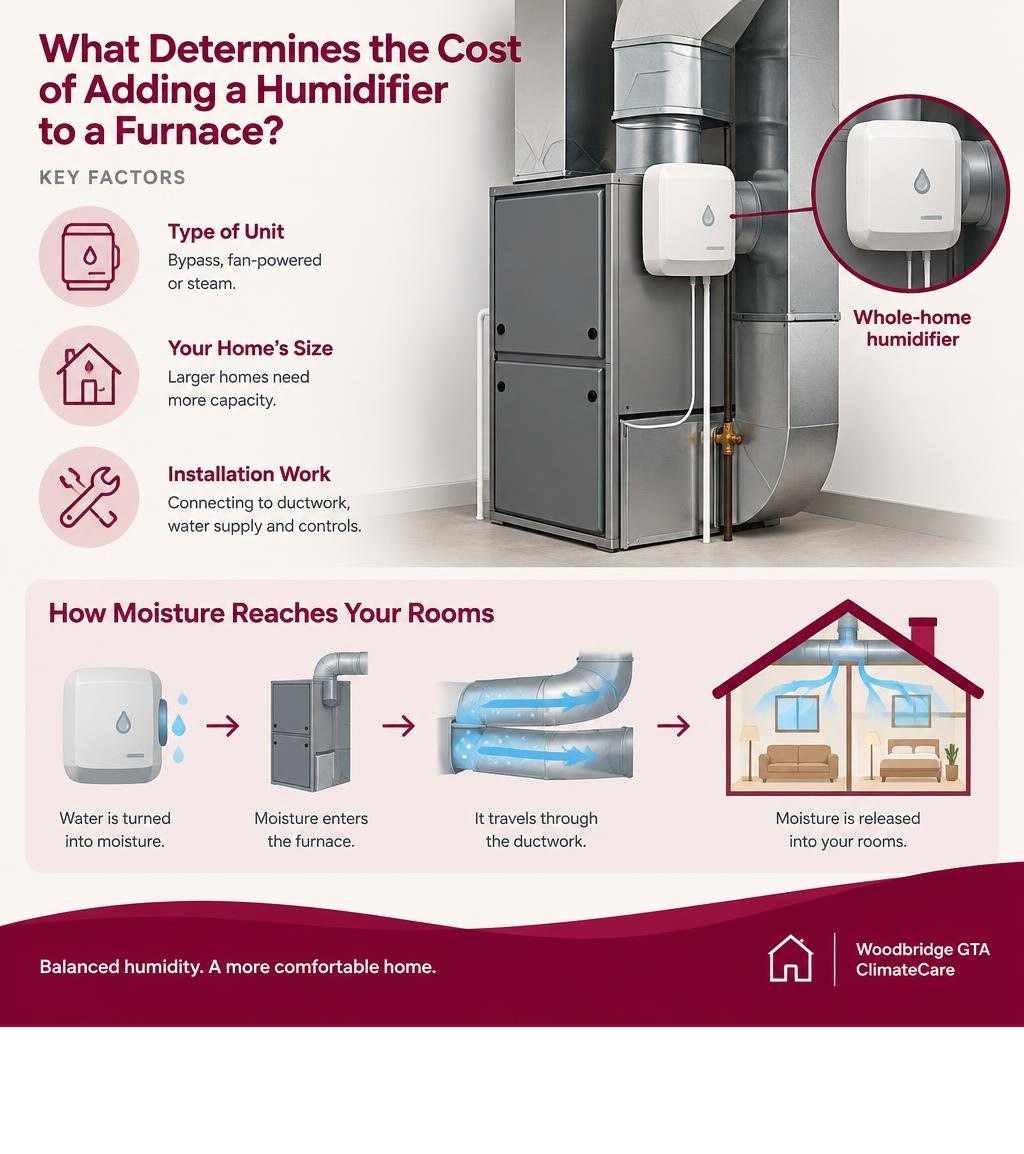
Key Factors Influencing the Cost of Adding Humidifier to Furnace Systems
Achieving balanced indoor air quality during Canadian winters is not just about keeping the heat running—it is about controlling moisture levels. When cold outdoor air enters your living space and gets heated by your forced-air system, relative humidity drops significantly. This creates parched conditions that can cause scratchy throats, static shocks, and shrinking hardwood floors.
When planning this upgrade, the overall investment depends on your property's specific characteristics:
- Home Square Footage and Layout: Larger properties need higher moisture output, requiring units with greater daily capacity. Multi-story homes or open-concept designs demand balanced airflow distribution.
- Ductwork Configuration: Furnaces with limited plenum space or non-standard duct orientations may require custom sheet metal transitions or duct modifications to mount the unit properly.
- Utility Access: Connecting the system requires access to a dedicated water supply line, a nearby floor drain for wastewater, and a proper low-voltage or high-voltage power source.
- Control Integration: Modern installations often integrate digital or smart automatic humidistats that monitor outdoor temperatures to prevent condensation on interior window glass.
System Selection and the Cost of Adding a Humidifier to a Furnace
Choosing the right technology is the foundation of whole-home humidity control. Each type of equipment operates differently and is designed for specific home sizes and heating configurations.
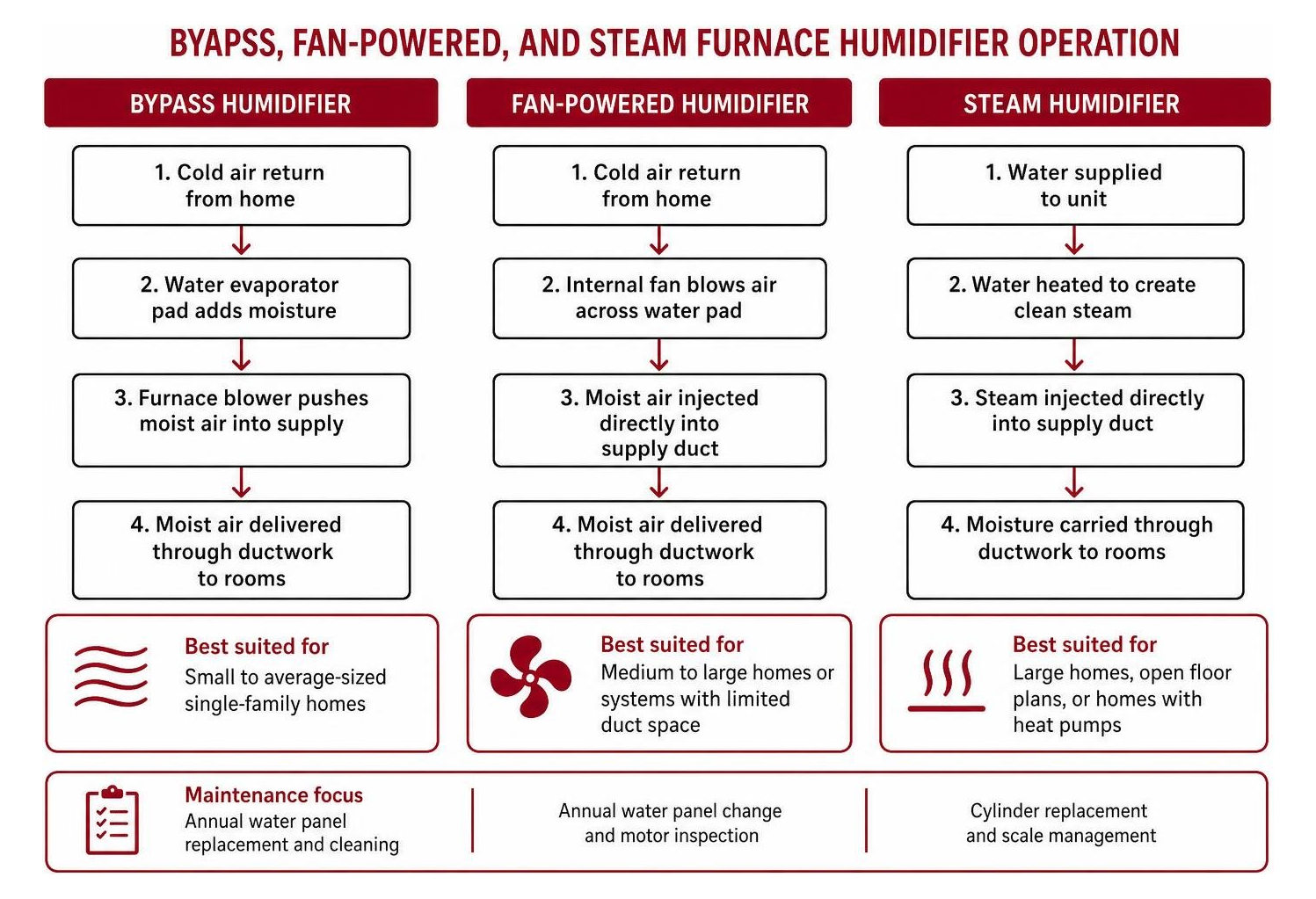
- Bypass Models: These are the most common additions to traditional forced-air furnaces. They require a bypass duct connecting the supply and return air plenums. Air passes through a moist water panel, picking up humidity naturally as the heating cycle runs.
- Fan-Powered Models: These units feature their own integrated fan. They pull air directly from the ductwork across the internal pad without needing a separate bypass pipe, making them an excellent choice when basement utility space is tight.
- Steam Models: Rather than relying on warm furnace air to evaporate water from a pad, steam units use internal electric heating elements or electrodes to boil water and produce pure steam on demand. They provide precise moisture control even when the furnace is not actively heating, which is ideal for larger estates or homes utilizing low-temperature heat pumps.
To explore which style matches your heating system, learn more about our whole-home humidifiers.
Installation Complexity and Equipment Sizing
Proper sizing is measured in gallons per day (GPD)—the volume of moisture a unit can introduce into your home's air over a 24-hour period. Selecting the right GPD capacity requires evaluating your home's building envelope:
- Envelope Tightness: Newer, well-insulated homes in the Greater Toronto Area retain indoor humidity more effectively and require lower GPD capacity. Older homes with drafty windows and traditional construction allow moist air to escape, requiring higher-capacity equipment.
- Plumbing and Water Connections: Safe operation requires tapping into your home’s domestic water line with dedicated shut-off valves and running clean drain lines to safely handle discharge without risk of pooling or leaks.
- Electrical Specifications: While bypass units rely on low-voltage furnace control board wiring, advanced steam systems typically require a dedicated electrical circuit to handle their heating elements safely.
Professional Installation and Long-Term Value
Why Professional Expertise Impacts the Cost of Adding a Humidifier to a Furnace
Integrating plumbing, electrical wiring, sheet metal duct cutting, and sensitive HVAC controls is a job that demands licensed expertise. When a qualified technician handles your installation, they ensure the equipment functions safely without damaging your furnace heat exchanger or compromising indoor air quality.
Improper placement or incorrect water line installation can cause moisture to pool inside the ductwork, resulting in corrosion or mold growth. Professional installation includes calibrating automatic outdoor temperature sensors, testing airflow pressures, and ensuring code compliance across all electrical and plumbing connections.
Relying on certified technicians protects your manufacturer warranty and heating equipment. For more context on why complex HVAC jobs require certified professionals, see our guide on professional HVAC installation services.
Ongoing Operational Efficiency and System Upkeep
To keep your whole-home humidifier operating efficiently, routine maintenance should be part of your seasonal heating checkups.
Essential upkeep includes:
- Evaporator Pad Replacement: Water panels collect mineral scale from municipal water supplies. Replacing these pads annually ensures clean evaporation and prevents airflow restrictions.
- Drain and Valve Inspections: Technicians clear drain lines and inspect solenoid water valves to prevent blockages or slow leaks.
- Summer Damper Settings: Bypass units feature a seasonal damper that must be closed during the summer air conditioning season to prevent cooled air from short-circuiting back through the furnace.
Combining your humidifier check with comprehensive furnace maintenance ensures your entire indoor air system runs smoothly throughout the winter.
Home Comfort and Health Benefits of Humidity Control
Balancing your indoor relative humidity between 30% and 50% delivers noticeable comfort and structural benefits:
- Respiratory and Skin Relief: Dry indoor air strips moisture from nasal passages and skin, worsening winter allergies, dry coughs, and eczema. Balanced moisture keeps sinuses lubricated and skin hydrated.
- Protection for Woodwork: Wood flooring, cabinetry, structural trim, and musical instruments shrink and crack in overly dry air. Consistent humidity prevents costly structural warping and gaps.
- Elimination of Static Electricity: Proper moisture levels dissipate electrical charges, stopping painful static shocks when touching doorknobs or family members.
- Enhanced Air Quality: Maintaining optimal humidity prevents airborne dust particles from circulating as freely. Pairing humidity control with modern indoor air purification solutions creates a healthier indoor environment.
- Moisture Management Guidance: Maintaining optimal levels prevents window condensation during deep Ontario cold snaps. For detailed guidance on household moisture balance, consult the Government of Canada's resource on Moisture Problems.
Frequently Asked Questions About Furnace Humidifiers
How does cold winter weather affect indoor humidity requirements?
When outdoor temperatures plummet during Southern Ontario winters, the indoor glass surfaces of your windows become much colder. If indoor humidity is set too high during severe cold snaps, moisture will condense on window panes and sills. Automatic digital humidistats continuously monitor outdoor conditions and automatically adjust indoor humidity targets downward during extreme cold to prevent condensation while maintaining comfortable air.
Can adding a humidifier help improve winter heating efficiency?
Yes. Humid air holds heat better and feels warmer against your skin than dry air because it slows down the rate of natural skin moisture evaporation. When your home maintains healthy humidity, you can comfortably lower your thermostat by one or two degrees without feeling chilly, helping reduce the workload on your central heating system throughout the winter.
How often does a furnace humidifier require professional servicing?
A whole-house humidifier should be professionally inspected at least once a year, ideally during your autumn heating tune-up. Professional technicians check water delivery lines, test solenoid valves, inspect drainage pathways, and ensure controls communicate properly with your furnace. Enrolling in routine maintenance plans ensures your heating and humidity systems receive scheduled care without hassle.
Conclusion
Adding a humidifier to your central furnace system is one of the most effective ways to improve winter comfort, protect your home’s wood furnishings, and support family respiratory health. Because every home has unique heating equipment, ductwork layouts, and water access requirements, scheduling a professional in-home evaluation is the best step toward finding the perfect system.
For over 50 years, the family-owned team at Woodbridge GTA ClimateCare has delivered trusted heating, cooling, and air quality solutions across Woodbridge, Vaughan, and the Greater Toronto Area. Whether you need an equipment assessment, system maintenance, or a new whole-house installation backed by our 100% satisfaction guarantee, our certified technicians are here to help.
To schedule your home assessment, contact Woodbridge GTA ClimateCare today.