Everything You Need to Know About Fixing a Broken Furnace Ignitor
How to Tell If You Have a Broken Furnace Ignitor
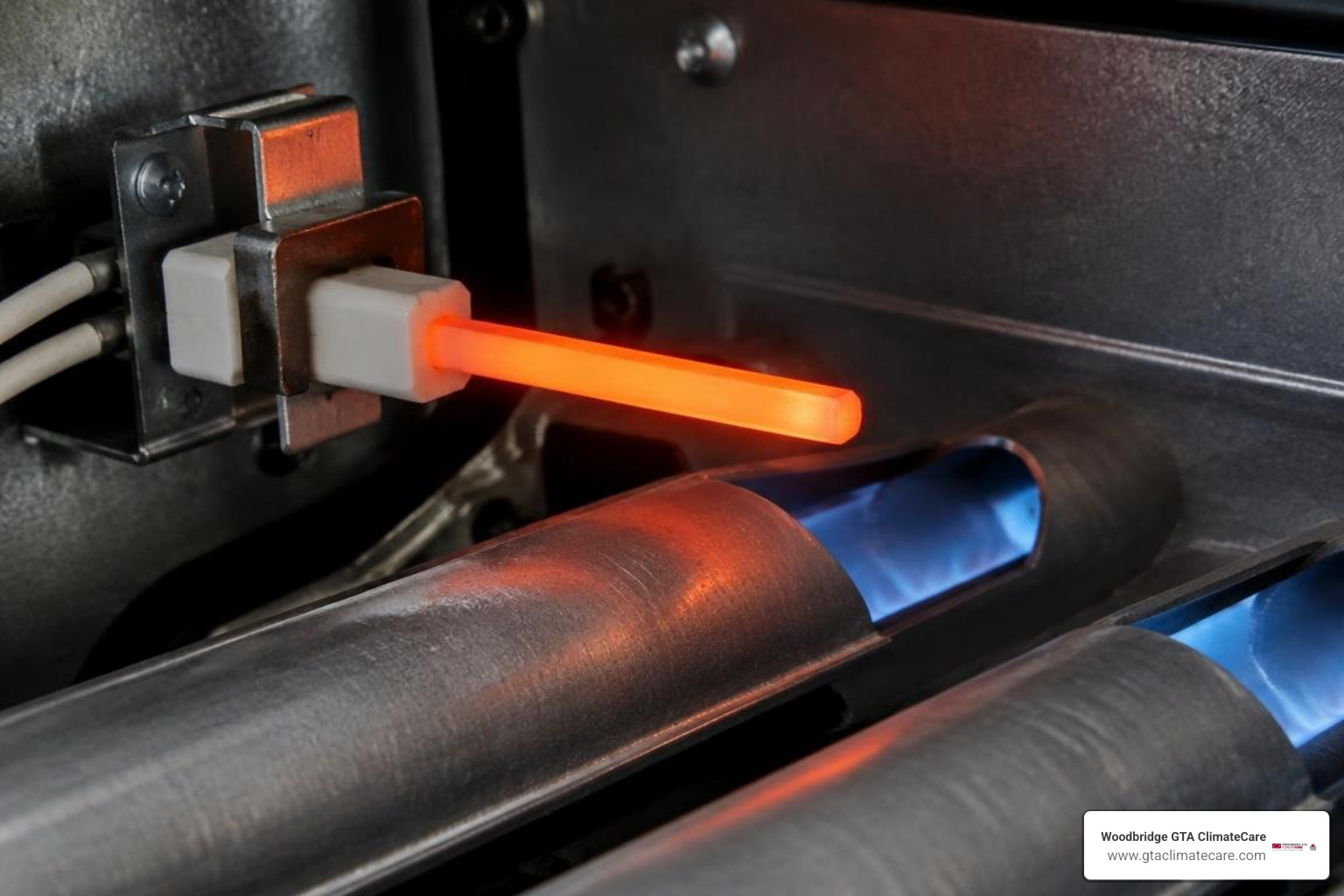
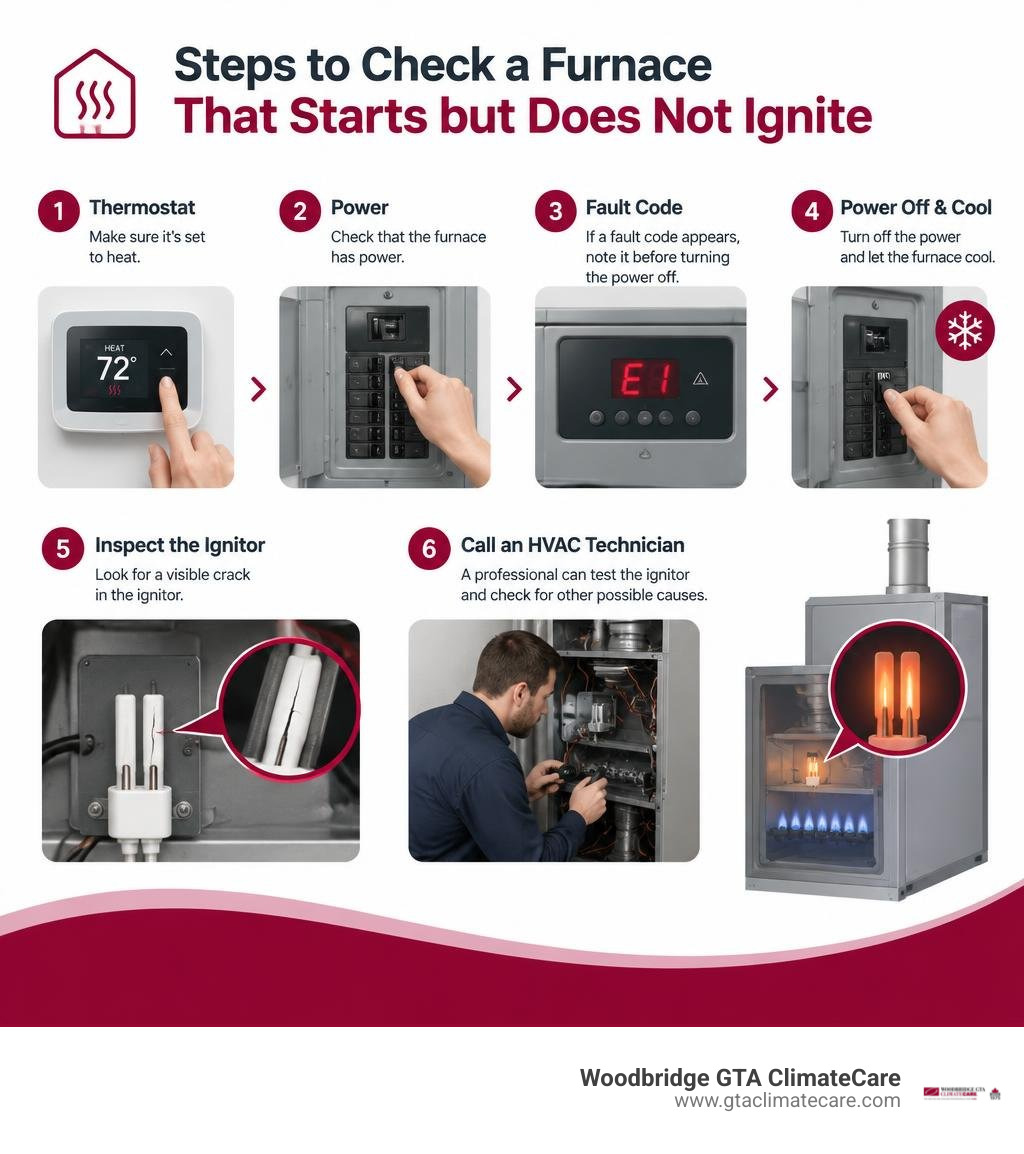
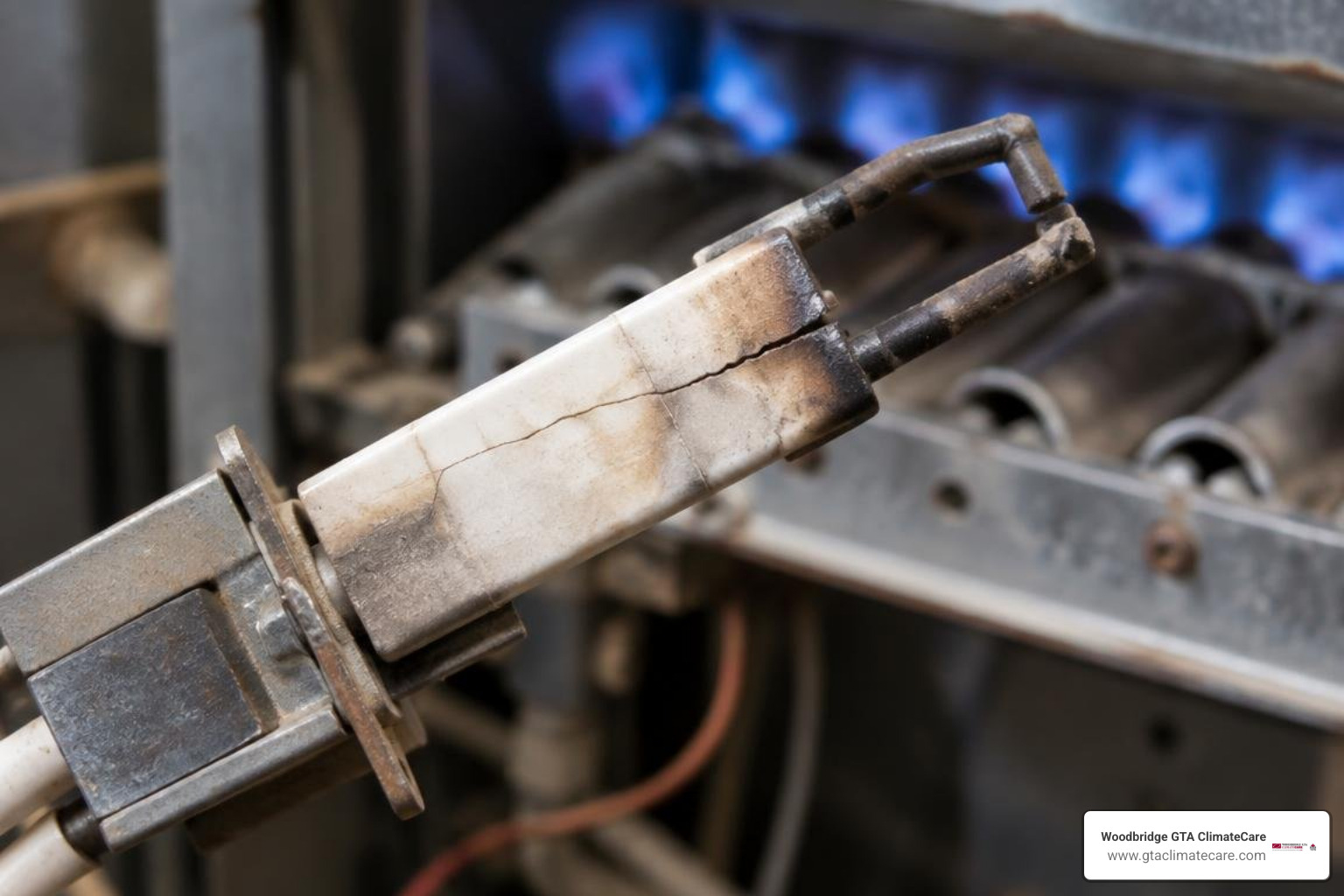
If your furnace starts but the burners do not light, a broken furnace ignitor is one possible cause. Check that the thermostat is set to heat and the furnace has power. If your furnace shows a fault code, note it before turning the power off. Then, with the power off and the furnace cool, look for a visible crack in the ignitor. A crack is a strong sign it needs replacement, but no visible damage does not rule out a fault. Do not touch the ignitor element or keep resetting a furnace that fails to light. An HVAC technician can test it and check other possible causes.
At Woodbridge GTA ClimateCare, we know how important it is to confirm whether a broken furnace ignitor is truly the cause before replacing a part.
Understanding How Furnace Ignitors Work and Why They Fail
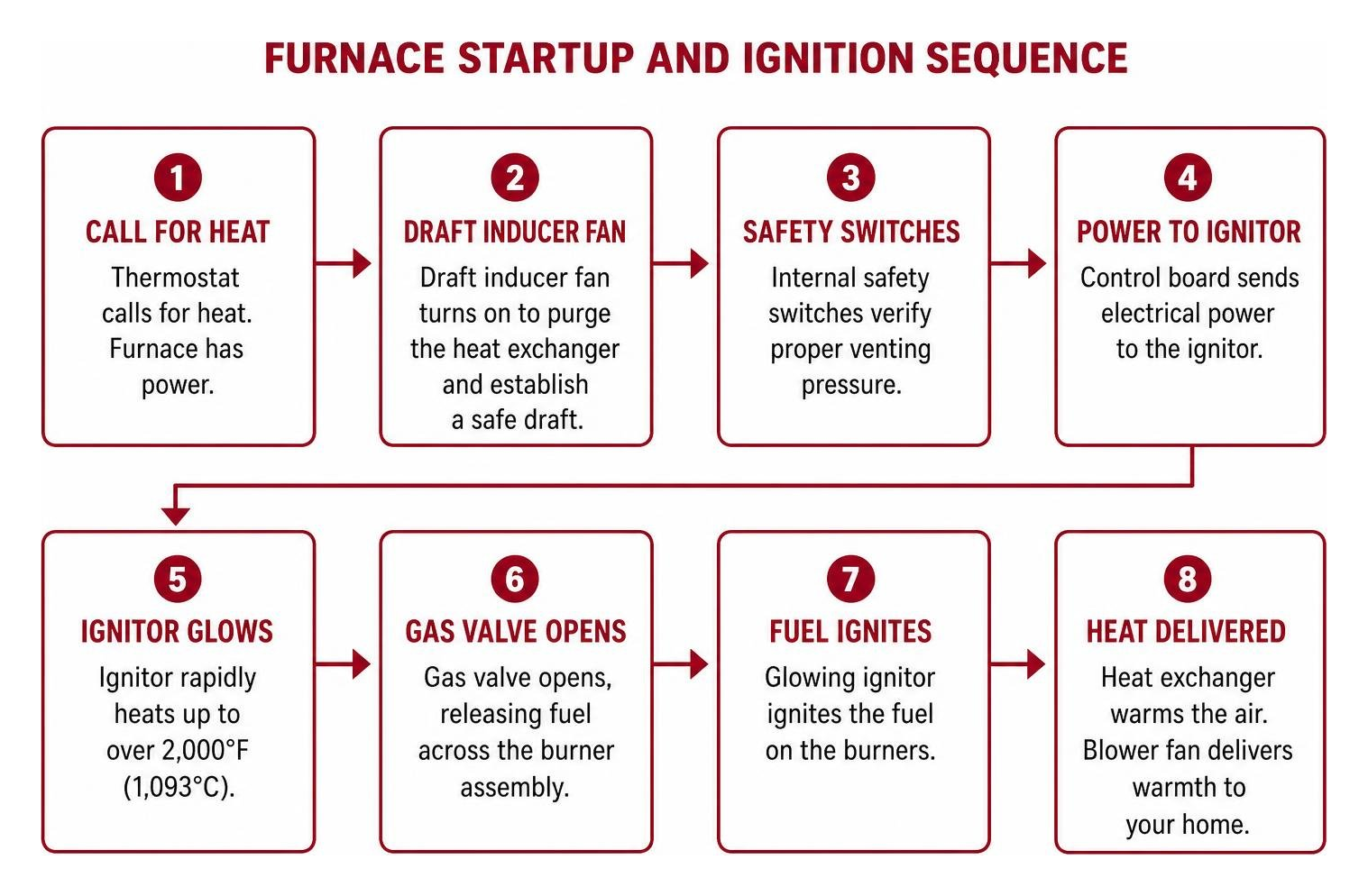
A furnace ignitor serves as the spark plug or matchstick of your heating system. When your thermostat calls for heat, the furnace initiates an automatic ignition sequence. First, the draft inducer fan turns on to purge the heat exchanger of residual gases and establish a safe draft. Once the internal safety switches verify proper venting pressure, the integrated control board sends electrical power to the ignitor.
In a standard modern system, this component rapidly heats up to temperatures exceeding 2,000°F (1,093°C). Once the ignitor reaches peak thermal glow, the gas valve opens, releasing fuel across the burner assembly. The glowing element ignites the fuel, warming the air within the heat exchanger before the main blower fan delivers warmth across your home.
Because ignitors repeatedly endure extreme thermal expansion and contraction across thousands of heating cycles every winter, they experience immense physical stress. Over time, electrical surges, material fatigue, and structural oxidation weaken the component until it eventually cracks or burns out.
Types of Ignitors: Hot Surface, Spark, and Standing Pilot
Furnace designs have evolved significantly over the decades, shifting from fuel-wasting manual flames to advanced electronic controls.
- Hot Surface Ignitors (HSI): The most common mechanism found in modern residential systems. These rely on specialized ceramic-based resistance elements—traditionally silicon carbide or newer, more durable silicon nitride. When high voltage passes through the element, it glows white-hot to ignite the gas stream directly.
- Direct Spark Ignitors (DSI): Rather than heating a ceramic element, direct spark systems generate a high-voltage electrical arc (similar to an automotive spark plug) across a small gap directly over the gas burner.
- Intermittent Pilot Systems: An electronic ignition hybrid that uses an electric spark to light a small pilot flame only when heat is required. Once the pilot flame is confirmed, the main gas valve opens.
- Standing Pilot Lights: Found almost exclusively in older heating units. These maintain a continuous, open flame 24/7. While mechanically simple, they continuously consume gas even when no heat is required, making them far less efficient.
Root Causes of a Broken Furnace Ignitor
Several distinct factors can lead to early burnout or failure:
- Thermal Fatigue and Age: Heating and cooling thousands of times naturally causes the fragile ceramic matrix to become brittle.
- Skin Oil Contamination: Touching the dark gray element of a hot surface ignitor transfers natural skin oils. When energized, these oils create concentrated hot spots on the ceramic, leading to hairline fractures and premature failure.
- Restricted Airflow and Thermal Shock: Dirty air filters choke off return airflow, causing internal furnace cabinet temperatures to spike. These extreme temperature swings severely shorten component life.
- Electrical Voltage Spikes: High incoming electrical line voltage or transient power surges can exceed component tolerances, burning out the element instantly.
- Chemical and Moisture Exposure: Storing corrosive household chemicals, paints, or laundry detergents near the furnace can introduce airborne contaminants that degrade the ceramic coating during combustion.
Key Warning Signs of a Broken Furnace Ignitor
When an ignition element fails, your heating system cannot transition from the startup sequence to sustained burner operation. Recognizing early symptoms helps you address minor heating issues before total system shutdown occurs.
Common Symptoms: Cold Air, Clicking Sounds, and Short Cycling
- Furnace Blows Cold Air: If your furnace blower fan is circulating unheated room air, it usually means the safety controls shut down the gas supply because no flame was produced during the ignition window.
- Repeated Clicking Without Combustion: You hear the gas valve click open or the relay click on the board, but you never hear the familiar "whoosh" of natural gas igniting.
- No Visible Glow: Modern furnaces feature an observation sight glass on the burner cover. If you do not see a bright yellow or orange glow during startup, the ignitor is not drawing current.
- Short Cycling and Safety Lockouts: The furnace attempts to ignite three or four consecutive times, fails, and shuts off entirely to prevent unburned gas accumulation.
- Tripped Circuit Breakers: A shorted internal heating element can draw excessive amperage, occasionally tripping the furnace’s dedicated electrical circuit breaker.
If your furnace exhibits these warning signs during freezing winter weather, scheduling prompt furnace repair ensures your heating is restored safely and efficiently.
Differentiating Between a Faulty Ignitor, Flame Sensor, and Gas Valve
Because multiple furnace components work in rapid succession, diagnosing the failure point requires careful observation of the startup cycle:
- Broken Ignitor: The draft inducer runs, but the ignitor never glows or produces a spark. The gas valve may open briefly, but no flame ever catches.
- Dirty or Faulty Flame Sensor: The ignitor glows brightly, the burners light successfully, but the flame abruptly cuts out after 2 to 5 seconds. The control board shuts the gas valve because the sensor failed to detect the electrical microamp signal created by the flame.
- Defective Gas Valve: The ignitor glows bright orange, but no flame appears, and you hear no clicking from the gas valve solenoid.
- Faulty Control Board: The inducer motor does not start, or voltage is never sent to the ignition circuit despite an active call for heat from the thermostat.
Scheduling furnace maintenance each autumn allows technicians to clean the flame sensor, check electrical resistance, and verify gas manifold pressures before cold weather arrives.
Frequently Asked Questions About Furnace Ignitor Failure
How long does a furnace ignitor typically last?
A standard hot surface ignitor typically lasts between 3 and 7 years. Lifespan depends directly on the number of heating cycles per season, overall air filtration quality, and whether your furnace uses silicon carbide or upgraded silicon nitride elements. Homeowners can protect their equipment with our WeCare maintenance and protection plans, which include annual tune-ups, priority service, and full parts coverage.
Can touching an ignitor with bare hands cause premature burnout?
It can. Hot surface ignitors are fragile, and handling the element with bare hands can leave residue that may contribute to hot spots and premature failure. Because diagnosing and replacing an ignitor also involves electrical and gas-system safety checks, it is best to have a qualified HVAC professional inspect the furnace, confirm the cause of the problem, and install the correct replacement part.
Why does the furnace blower run if the ignitor is broken?
The main blower fan often continues to run as a built-in safety measure. When the furnace control board detects that the burners failed to ignite, it enters a post-purge or safety lockout sequence. The blower operates continuously to cool down the internal heat exchanger and clear out any residual unburned fuel gas from the cabinet, circulating unheated air through your supply vents.
Conclusion
A malfunctioning heating system in the middle of a Canadian winter requires fast, dependable service. If your furnace is short cycling, blowing cold air, or clicking repeatedly without lighting, a broken furnace ignitor is often the primary reason.
With over 50 years of family-owned, locally focused experience across the Greater Toronto Area, Woodbridge GTA ClimateCare provides complete heating, cooling, and indoor air quality solutions backed by our 100% satisfaction guarantee. Contact our team today to schedule your furnace inspection and keep your home warm all season long.