Why Hybrid Heat Pump Setups Deliver the Best of Both Worlds
What Dual-Fuel HVAC Installation Involves
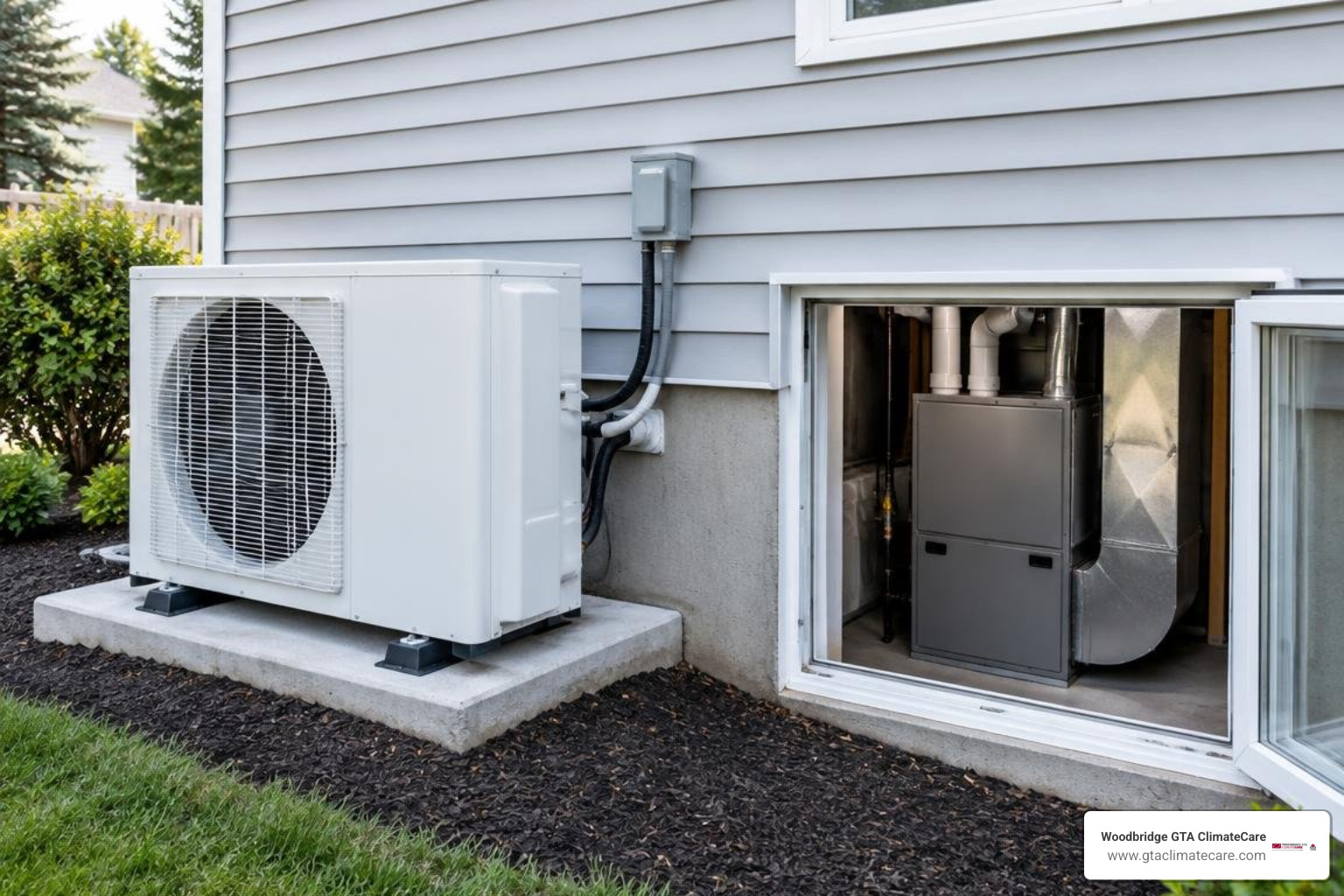
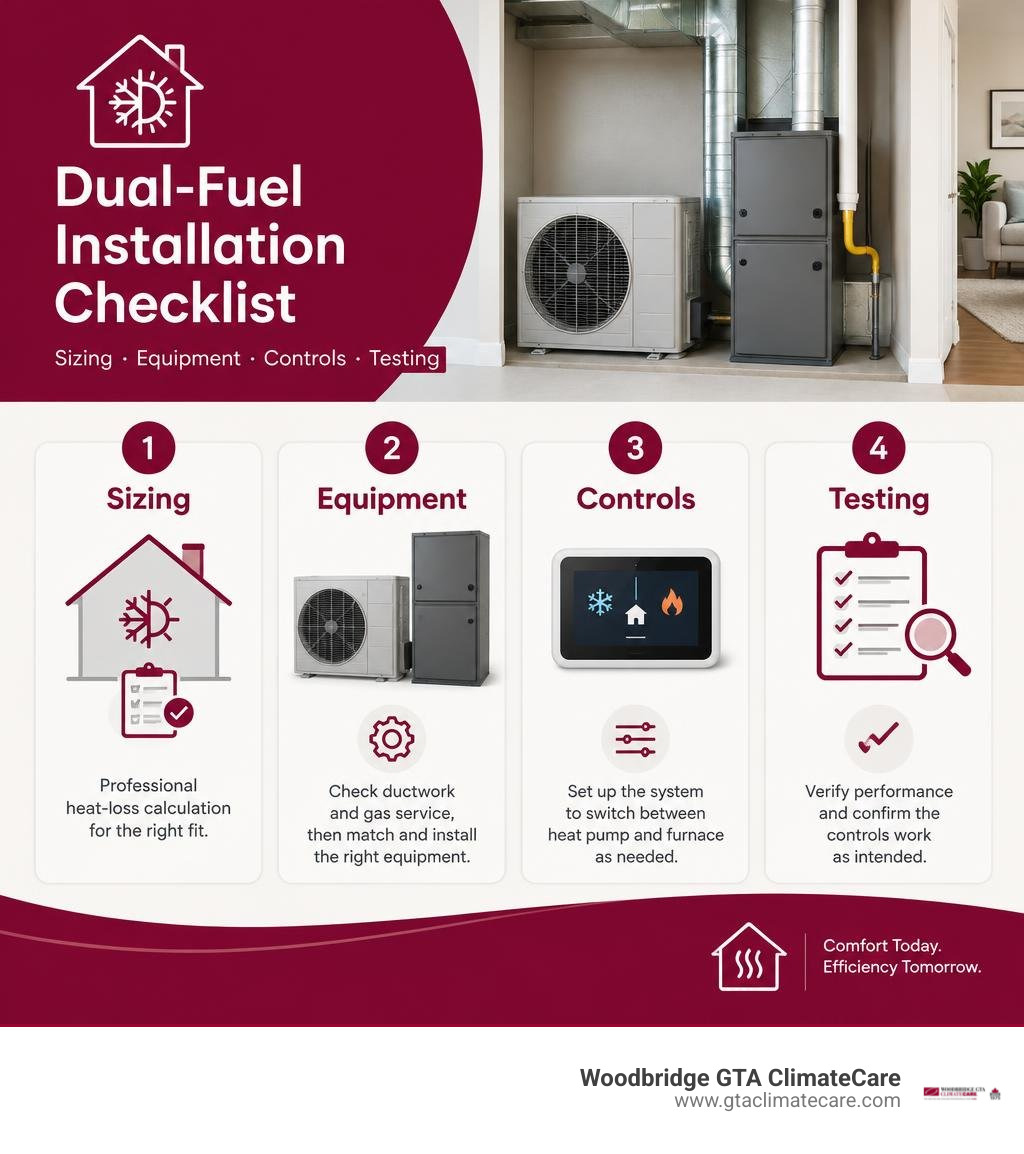
Plan your dual fuel hvac installation around a professional heat-loss calculation , not your old system's size. A qualified HVAC contractor should check the ductwork and gas service, match the heat pump and furnace, install the equipment, then set up and test the controls that switch between them. The heat pump handles cooling and much of the heating; the furnace takes over when the controls call for gas heat.
This guide covers dual fuel HVAC installation, from choosing a setup to checking that it works as intended.
Understanding How Dual-Fuel Hybrid HVAC Systems Work
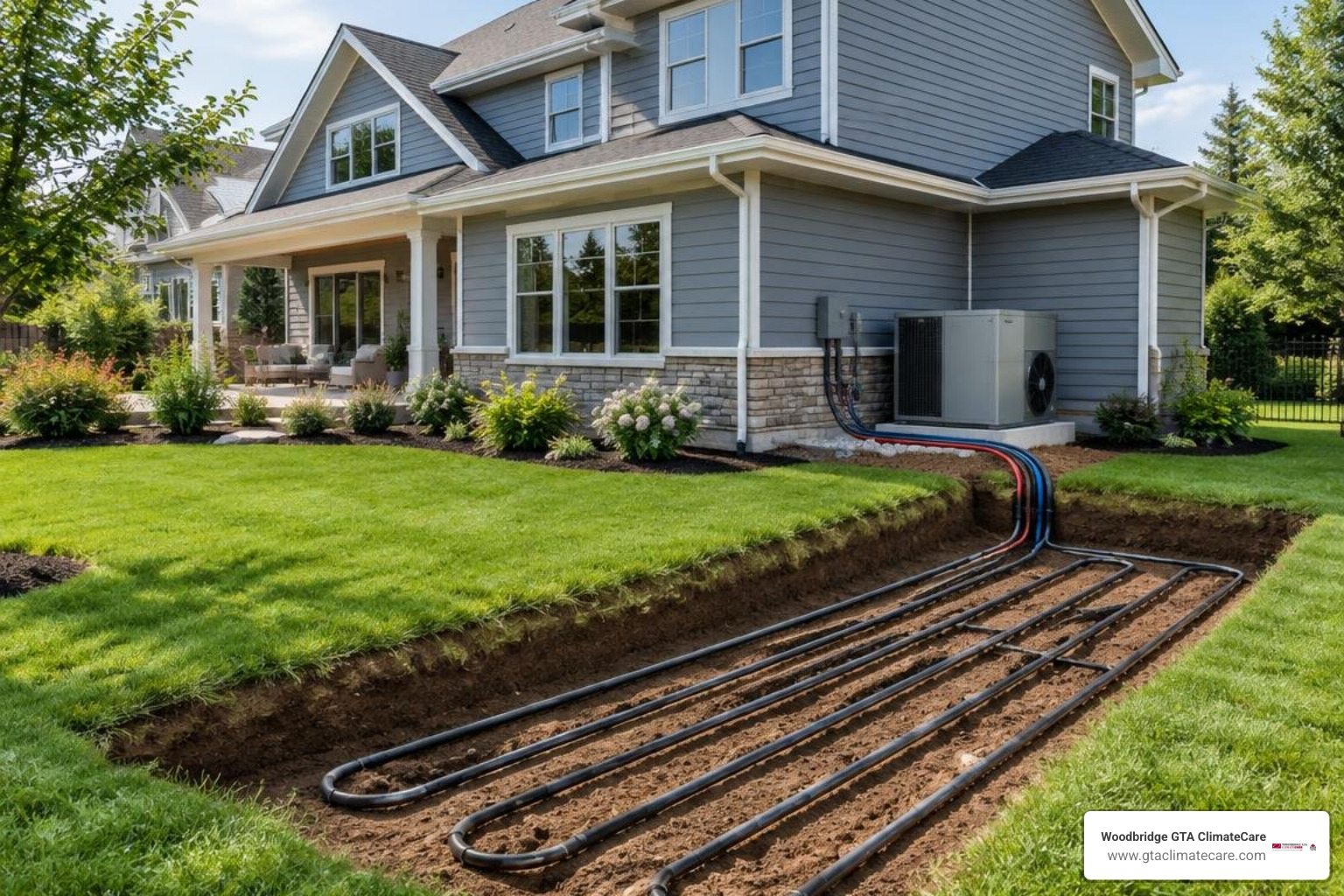
A dual-fuel hybrid HVAC system is the residential heating equivalent of a modern hybrid vehicle. Instead of relying exclusively on one energy source regardless of weather conditions, it pairs an electric heat pump with an auxiliary gas furnace. The two units share the same ductwork and are managed by an intelligent control setup that monitors outdoor conditions in real time.
Electric heat pumps operate on a thermodynamic principle: rather than creating heat by combusting fuel, they move existing thermal energy from the outdoor air into your home. Because moving heat requires far less energy than generating it, modern heat pumps can deliver efficiencies of up to 300% or higher under mild conditions. That means for every single unit of electricity consumed, the system can deliver three to four units of usable heat into your living space.
However, as outdoor temperatures plunge toward sub-zero levels, the heat pump must work harder to extract warmth, and its heating capacity gradually drops. This is where the secondary heat source steps in. A gas furnace (rated between 80% and 98% AFUE) generates intense, high-temperature heat directly through combustion, making it an exceptional backup during deep winter freezes.
The Role of Electric Heat Pumps in Mild Weather
During autumn, spring, and mild winter days, the electric heat pump handles 100% of your home's heating needs. Modern inverter-driven, variable-speed compressors continuously modulate their output to match your indoor thermal demand, maintaining steady indoor temperatures without the abrupt cycling associated with older single-stage units.
In summer, the system simply reverses its refrigerant flow to provide high-efficiency heat pump cooling. Modern systems achieve cooling efficiencies up to 23 SEER2 and heating efficiencies up to 12.5 HSPF2, keeping summer electricity costs low while acting as a whisper-quiet air conditioner.
How the Auxiliary Gas Furnace Takes Over in Freezing Temperatures
When polar vortex conditions hit, the system automatically transitions heating responsibilities to the gas furnace. A modern, furnace installation delivers fast, high-temperature air through your registers, quickly satisfying the thermostat even when outdoor temperatures dip well below freezing.
Using the gas furnace strictly during extreme cold protects your comfort while avoiding the heavy electricity demand of electric resistance heat strips. It also reduces wear on the heat pump during extreme weather.
Setting the Optimal Switchover Temperature and Balance Point
The switchover temperature—often called the balance point—is the specific outdoor temperature threshold at which your system hands off heating duties from the heat pump to the gas furnace.
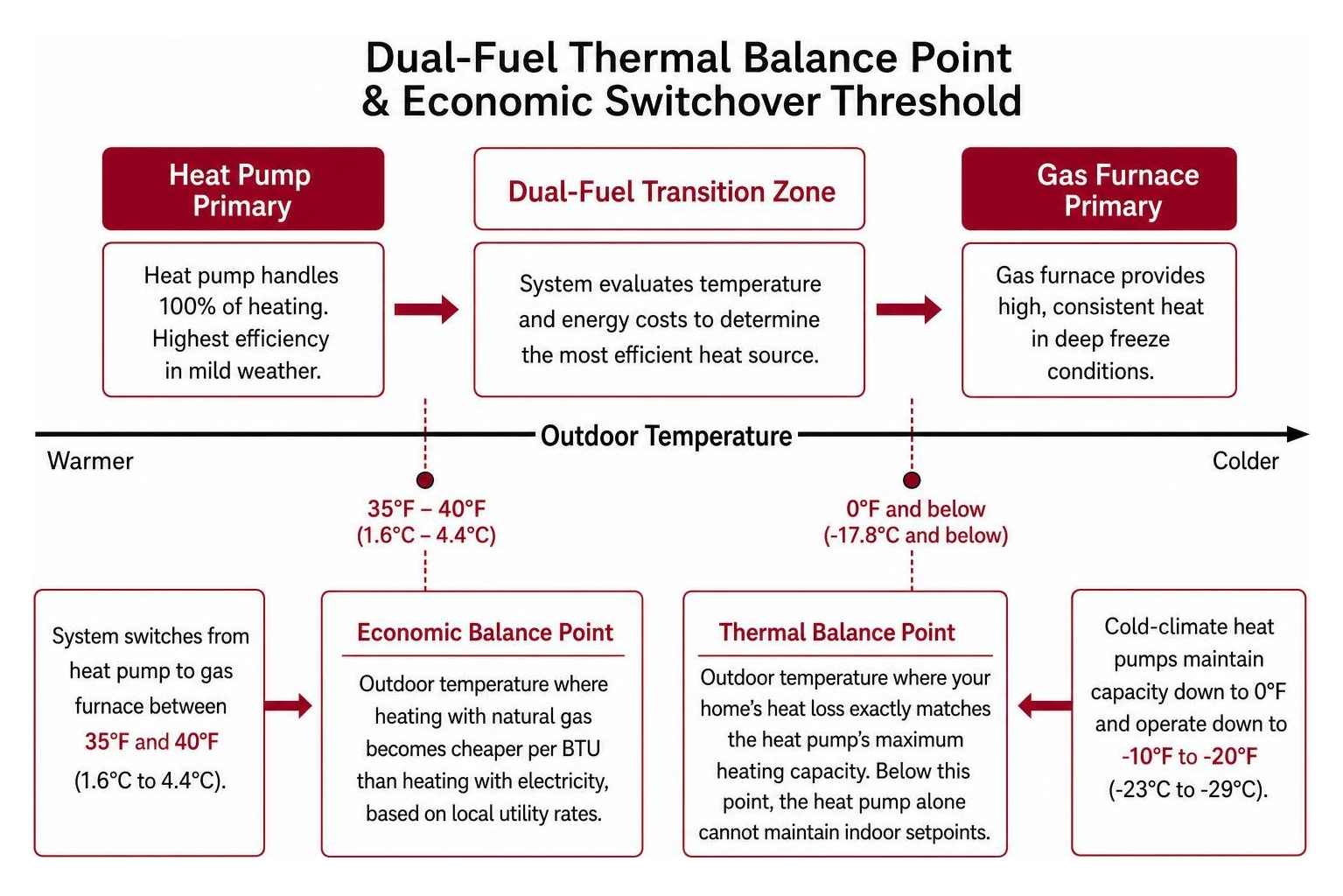
- Thermal Balance Point : The outdoor temperature where your home's heat loss exactly matches your heat pump's maximum heating capacity. Below this point, the heat pump alone cannot maintain indoor setpoints without assistance.
- Economic Balance Point : The outdoor temperature where heating with natural gas becomes cheaper per BTU than heating with electricity, calculated using local utility rates.
In most standard setups, dual-fuel systems are configured to switch from the electric heat pump to the gas furnace between 35°F and 40°F (1.6°C to 4.4°C). However, cold-climate heat pumps featuring advanced inverter compressors can maintain maximum capacity down to 0°F and operate down to -10°F or -20°F (-23°C to -29°C), allowing technicians to program a much lower switchover setpoint to maximize electric heating.
Complete Step-by-Step Guide to Dual Fuel HVAC Installation
Executing a proper dual-fuel installation requires integrating gas piping, high-voltage electrical, sensitive low-voltage control communication, and sealed refrigeration lines into one coordinated setup.
Pre-Installation Planning and Sizing for a Dual Fuel HVAC Installation
A successful hybrid installation starts with accurate system sizing. Sizing equipment based purely on square footage or replacing old equipment with identical tonnage often leads to short-cycling, poor dehumidification, and premature component wear.
Contractors must perform a detailed heat-loss and heat-gain calculation using a method appropriate to the home and applicable Canadian requirements. This evaluates:
- Home insulation values (attic, walls, foundation)
- Window surface areas, glazing types, and solar orientation
- Air leakage rates
- Existing supply and return ductwork capacities
When exploring options for a new setup, knowing what you should know when buying a new furnace helps ensure the indoor blower motor matches the required CFM airflow for both heat pump cooling and gas heating stages.
Installing the Indoor Evaporator Coil and Gas Furnace Integration
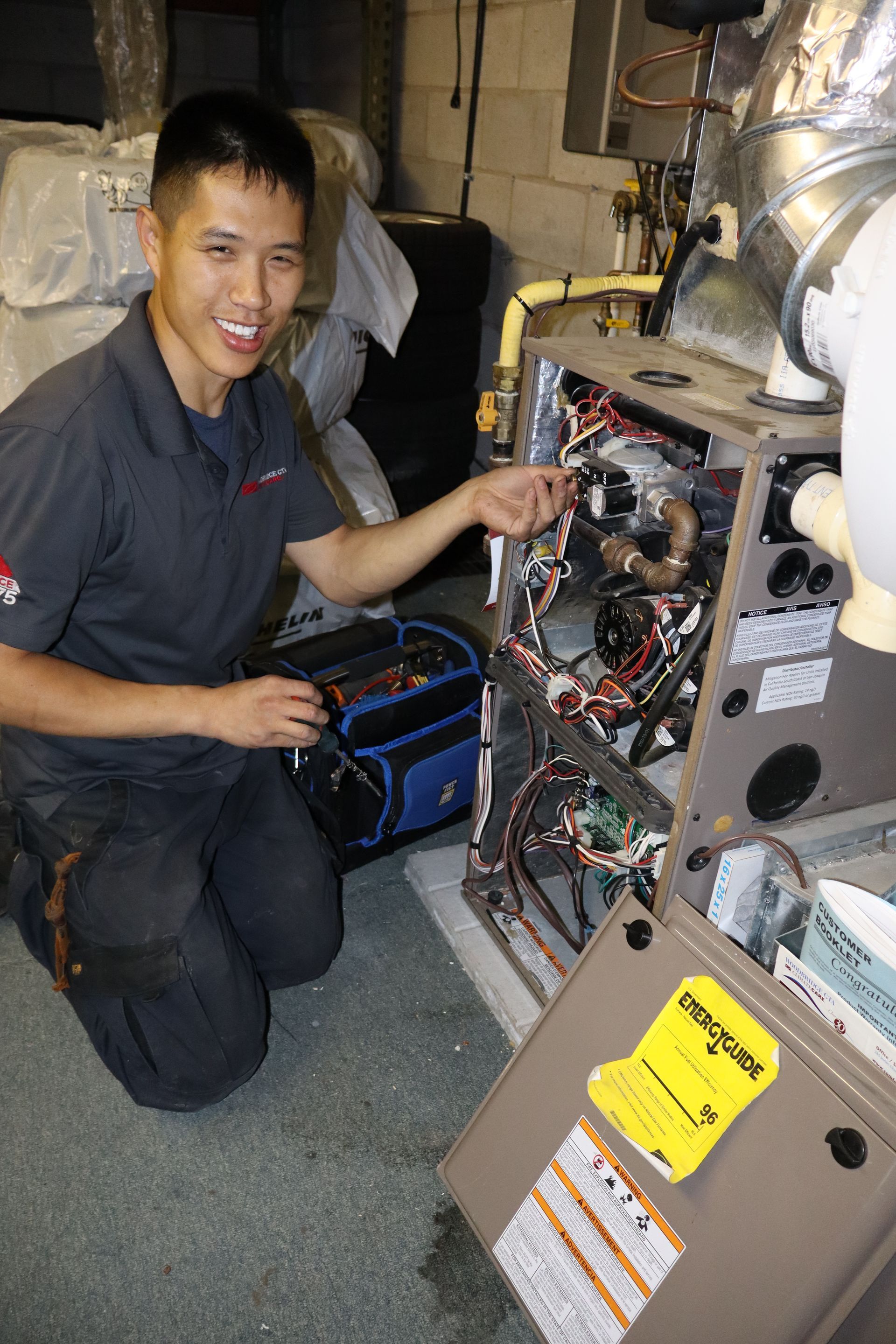
The indoor portion of a split dual-fuel system consists of the gas furnace and an upstream/downstream cased evaporator coil. In standard configurations, the evaporator coil sits directly on top of the furnace supply air outlet (in an upflow configuration).
Key mechanical steps include:
- Plenum Connection and Air Sealing : Mating the furnace to the sheet metal supply and return plenums using mastic sealant and foil-backed tape to ensure zero air leakage.
- Gas Piping and Drip Leg Installation : Running black iron or certified corrugated stainless steel tubing (CSST) to the furnace gas valve, installing a dedicated manual shut-off valve, a ground joint union, and a vertical sediment trap (drip leg) to catch contaminants before they enter the burners.
- Venting and Combustion Air : Connecting PVC/CPVC or polypropylene venting for high-efficiency condensing furnaces, ensuring proper pitch (at least 1/4-inch per foot toward the furnace) for condensate drainage.
- Manifold Pressure Calibration : Using a digital manometer to verify and set manifold gas pressure according to manufacturer specifications (typically 3.2 to 3.6 inches water column on high fire and 1.7 to 2.1 inches water column on low fire for natural gas).
Outdoor Condenser Setup and Refrigerant Line Commissioning
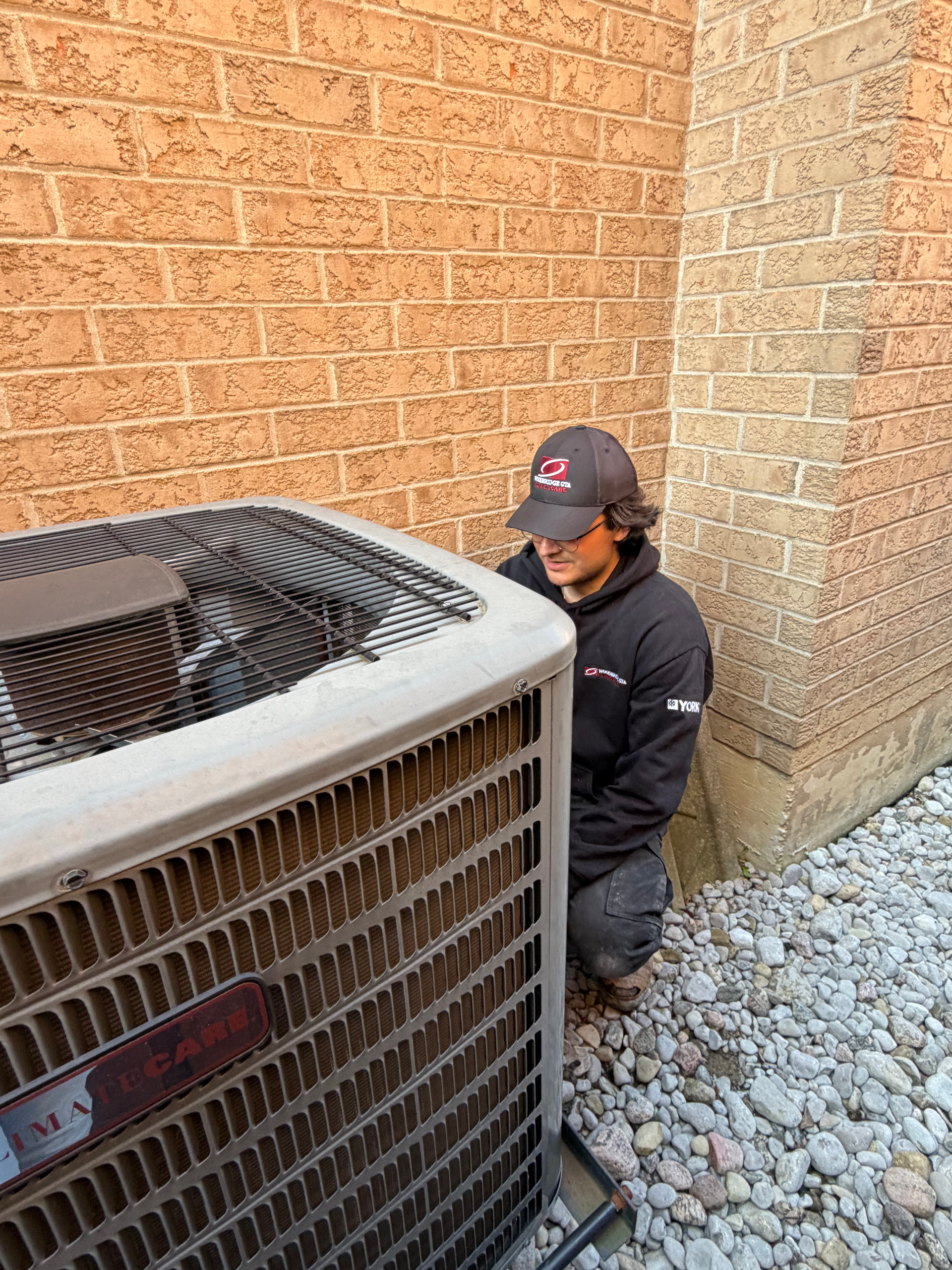
The outdoor heat pump unit requires a level, vibration-isolated composite pad elevated several inches above local snow accumulation levels.
Refrigerant line commissioning involves:
- Line Set Preparation : Running appropriately sized liquid and suction copper lines. When retrofitting existing lines, technicians perform an acid flush and install bi-directional liquid line filter driers to protect the compressor from moisture and debris.
- Pressure Testing : Pressurizing the lines with dry nitrogen to 400–500 PSI to verify leak-free brazed joints.
- Deep Vacuum Evacuation : Pulling a vacuum down below 500 microns to eliminate all non-condensibles and moisture before releasing the refrigerant charge.
- A2L Refrigerant Compliance : Modern heat pumps utilizing low-GWP refrigerants (such as R-454B or R-32) require specific leak-detection sensor integration and designated clearance buffers around electrical disconnects.
Electrical, Controls, and Sensor Wiring for Dual-Fuel HVAC Installation
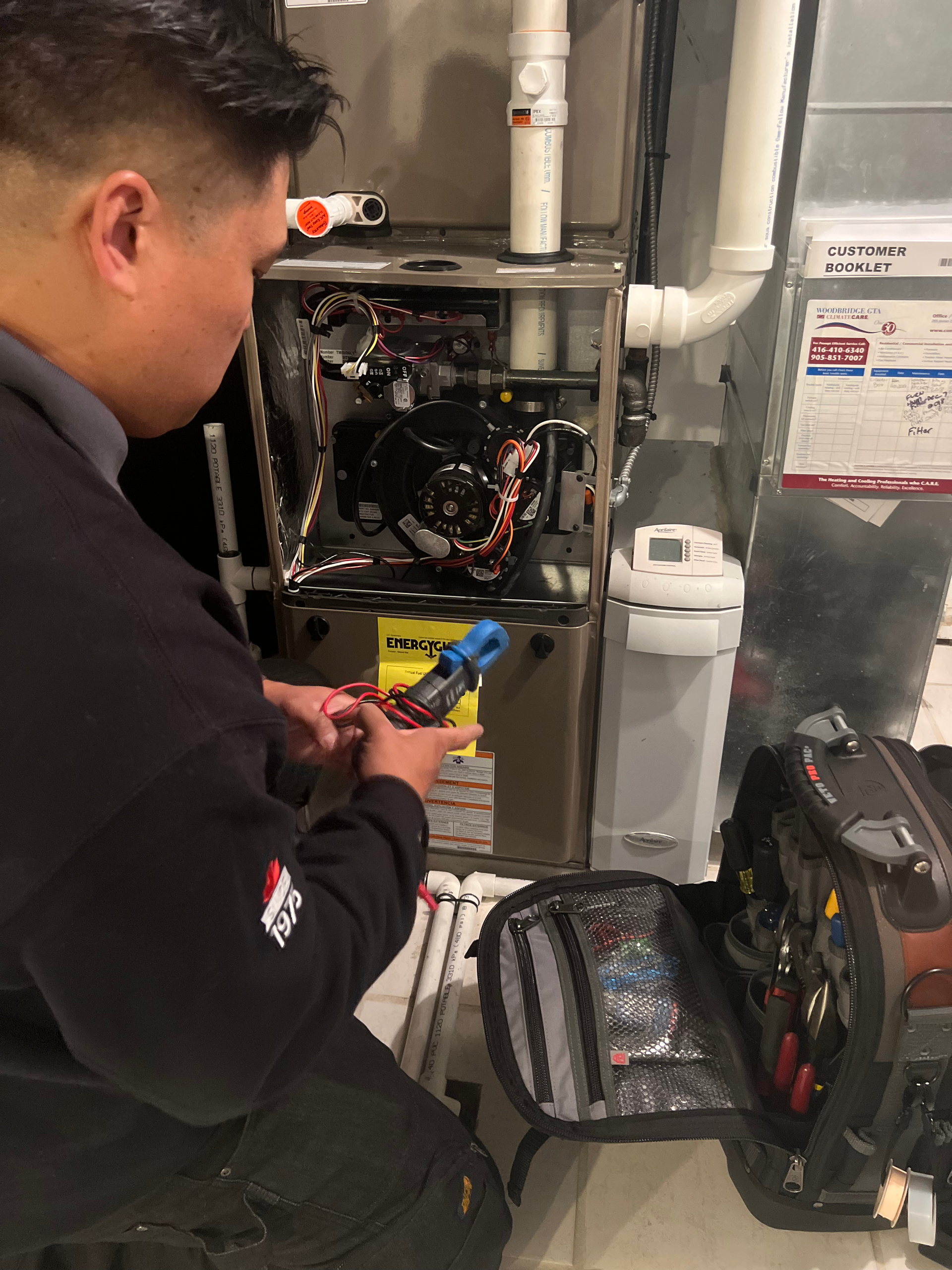
Controls wiring is the brain of a dual-fuel installation. Because the heat pump and the gas furnace must never run their primary heating cycles simultaneously (which would cause extreme head pressure spikes and high-limit trips), precise low-voltage interlocks are mandatory.
Installations typically follow one of three control configurations:
- Dual-Fuel Capable Smart Thermostat : Direct connection using R, C, W1/W2, Y1/Y2, G, and O/B terminals, using internet-based weather data or an outdoor temperature sensor.
- Dedicated Dual-Fuel Controller : A control board such as the Electro Industries Dual Fuel – HP Controller(WF-DFHP2), which monitors a dedicated outdoor thermistor and supply plenum warm-air sensor (ST) to automate switching and manage defrost cycles.
- Equipment Interface Module (EIM) : Advanced communicating systems use an Equipment Interface Module (EIM) to link non-communicating furnace boards with multi-stage communicating heat pumps.
During outdoor coil defrost cycles, the heat pump temporarily switches to cooling mode to warm its outdoor coil. The dual-fuel controller energizes the gas furnace burners briefly (defrost air tempering) to prevent cold air from blowing into your home while keeping heat pump head pressures within safe parameters.
Cost, Savings, and Financial Incentives for Hybrid Heating Systems
While a dual-fuel hybrid system requires a higher upfront investment than a standard standalone furnace or single-stage air conditioner, the long-term energy savings and available rebates help offset initial costs.
Installation costs vary based on capacity, efficiency ratings, controls, ductwork modifications, and warranty coverage. For a home in Woodbridge, Vaughan, or elsewhere in the Greater Toronto Area, request an itemized quote in Canadian dollars covering equipment, labour, permits, and warranty terms.
Return on Investment and Utility Rebates
By using the electric heat pump during shoulder seasons and moderate winter weather, homeowners can significantly cut overall heating bills. In many regions, heat pumps reduce net winter gas consumption by 40% to 60%, while the furnace prevents costly electric demand spikes during deep freezes.
Homeowners can often reduce upfront expenses by taking advantage of utility incentives, carbon-reduction grants, and manufacturer promotions. You can browse our current offers to see what incentives are active for high-efficiency hybrid equipment.
Maintaining and Troubleshooting Your Dual-Fuel System for Longevity
Because a dual-fuel system operates year-round—heating in winter, cooling in summer, and managing two distinct fuel sources—routine maintenance is essential to prevent unexpected breakdowns and keep operating efficiencies high.
- Air Filter Replacement (Every 1–3 Months) : Restricted airflow strains the heat pump compressor and can trigger furnace high-limit switches.
- Outdoor Coil Cleaning (Twice Annually) : Keep the outdoor unit free of leaves, dirt, and snow accumulation. Maintain a minimum 24-inch clearance around the condenser perimeter.
- Condensate Drain Clearing : Inspect furnace and evaporator coil drain lines, traps, and condensate pumps for algae or blockages.
- Professional Multi-Point Inspections : Schedule dedicated furnace maintenance in early autumn and heat pump maintenance in spring to check gas pressures, heat exchangers, electrical contactors, defrost cycle timing, and refrigerant charge balances.
Our comprehensive WeCare Maintenance and Protection Plans provide scheduled seasonal precision tune-ups, priority emergency service, and discounted repair coverage to keep your dual-fuel setup running smoothly year after year.
Frequently Asked Questions About Dual-Fuel HVAC Systems
Can I add a heat pump to my existing gas furnace to make a dual-fuel system?
Yes, in many cases you can add a heat pump to an existing furnace. If your current furnace is in good condition, an HVAC technician can install a matching cased evaporator coil on top of the furnace, connect an outdoor heat pump, and wire a dual-fuel thermostat or interface module. However, the existing furnace blower motor must provide sufficient airflow (CFM) for the heat pump's cooling and heating stages, and the physical dimensions of the supply plenum must fit the new coil.
Can a dual-fuel system run the heat pump and gas furnace at the same time?
No. In a standard residential split system, the evaporator coil is located downstream in the supply air stream of the gas furnace. If both fired simultaneously, the 120°F–140°F (49°C–60°C) air from the furnace heat exchanger would blow across the indoor refrigerant coil. This causes refrigerant temperatures and head pressures inside the heat pump circuit to spike rapidly, tripping high-pressure safety switches and risking severe compressor damage. Dual-fuel controllers and smart thermostats use built-in electrical and software interlocks to ensure only one primary heating mode runs at a time (except during short, controlled defrost tempering cycles).
Is a dual-fuel heat pump system worth the investment in cold climates?
Yes. Cold climates are actually where dual-fuel systems provide the greatest practical value. In regions with harsh winter freezes, relying exclusively on a standard heat pump can lead to high electric bills when backup electric heat strips engage. A dual-fuel setup lets you take full advantage of efficient electric heat pump operation during mild temperatures, while relying on the dependable heat of a gas furnace when severe winter weather arrives.
Conclusion
A dual-fuel HVAC installation brings together the energy efficiency of an electric heat pump and the heating power of a gas furnace. By automatically selecting the most effective heating source based on outdoor conditions, hybrid systems deliver year-round comfort, reduce carbon emissions, and help protect you from volatile energy prices.
For homeowners across the Greater Toronto Area, Woodbridge GTA ClimateCare delivers over 50 years of family-owned, locally focused HVAC expertise backed by our 100% satisfaction guarantee. Whether you want to design a new hybrid installation, replace an aging air conditioner with a modern heat pump, or explore complete home comfort solutions, our certified team is ready to help you build the ideal heating and cooling system for your home.