Water Heater Size Guide: Matching Tank Capacity and Flow Rate to Your Needs
Water heater size guide for your home
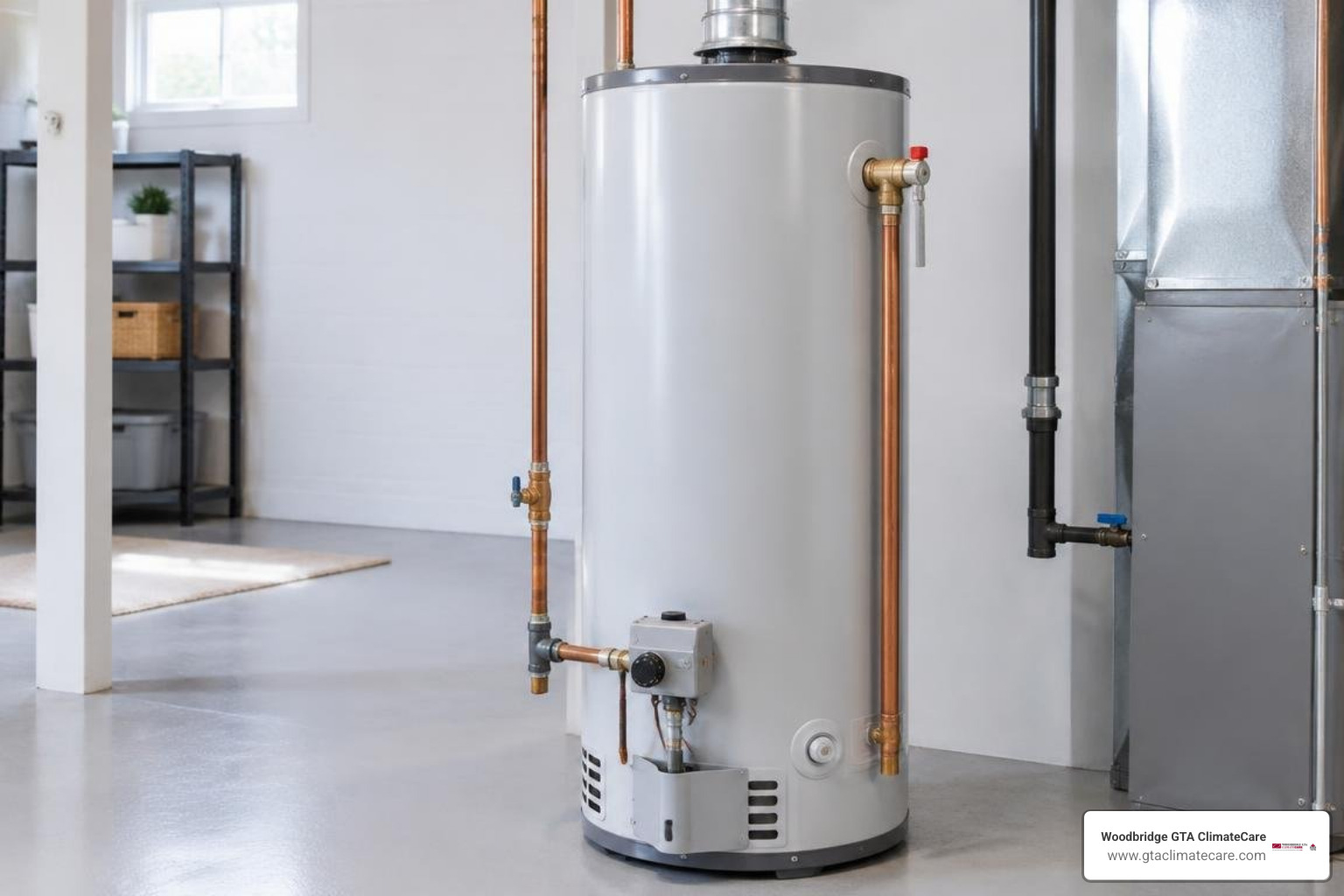
Professional water heater sizing considers your busiest period of use, not just household size. For storage tanks, a technician compares peak-hour hot water demand with the model’s first-hour rating—the amount a fully heated tank can deliver during its first hour of use. For tankless units, the technician assesses simultaneous fixture flow and performance at the coldest incoming water temperature. Contact Woodbridge GTA ClimateCare for a sizing assessment.
A 50-gallon tank is a starting point for a family of four, but back-to-back showers or a large bathtub may change what you need. In the Greater Toronto Area, winter water temperatures matter too. The sections below explain the factors a professional considers when recommending a size.
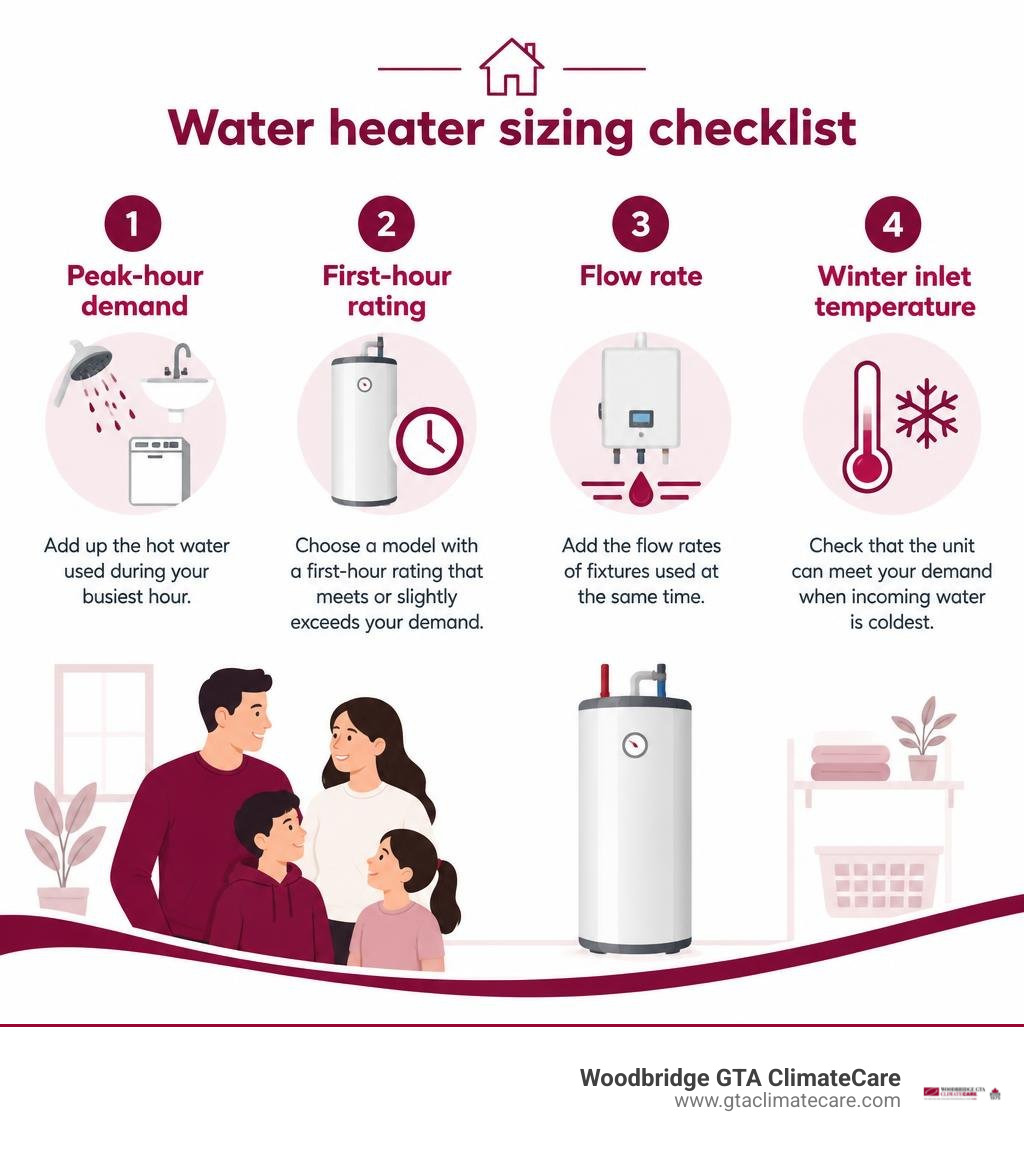
Water heating accounts for roughly 18% to 20% of a home's total energy use, making it one of the largest continuous energy draws on your monthly utility bill. A properly sized unit runs efficiently because it matches your actual household usage patterns. Oversized tanks constantly reheat unused water, while undersized units run nonstop to keep up with demand. Both scenarios drive up energy bills and shorten equipment lifespan.
Finding the sweet spot ensures that nobody gets stuck taking a freezing shower while the dishwasher is running.
Core Metrics in this Water Heater Size Guide
A professional sizing assessment looks beyond basic tank volume. Manufacturer specifications rely on a few core metrics that determine real-world performance:
- Tank Capacity: The total volume of water (measured in gallons or litres) held in the storage reservoir.
- First-Hour Rating (FHR): The amount of hot water a fully heated storage unit can deliver during its first hour of continuous, heavy use.
- Recovery Rate: The volume of water the heater can raise by a specific temperature rise within one hour.
- Peak-Hour Demand: The maximum amount of hot water your household uses during its busiest 60-minute window of the day.
- Standby Heat Loss: The thermal energy lost through the tank walls and connections while the unit waits for hot water taps to open.
Professional sizing balances tank capacity, first-hour rating and recovery rate. A 50-gallon tank with a powerful burner and a rapid recovery rate can deliver an FHR of 67 gallons, outperforming a slow-recovering 60-gallon tank when multiple people need showers back-to-back.
| Household Size | Typical Storage Capacity | Recommended First-Hour Rating (FHR) | Tankless Flow Rate (Peak GPM) |
|---|---|---|---|
| 1 to 2 People | 30 to 40 Gallons | 40 to 55 Gallons | 3.0 to 4.5 GPM |
| 3 to 4 People | 40 to 50 Gallons | 60 to 75 Gallons | 5.0 to 7.0 GPM |
| 5+ People | 60 to 80 Gallons | 80 to 95+ Gallons | 7.0 to 11.0 GPM |
Storage Tank Water Heater Size Guide
Traditional storage tank water heaters remain popular for their dependability and simple operation. Professional sizing considers your household’s busiest hour of hot water use rather than daily averages. Daily hot water consumption can range anywhere from 40 gallons per person to more than 80 gallons in busy homes.
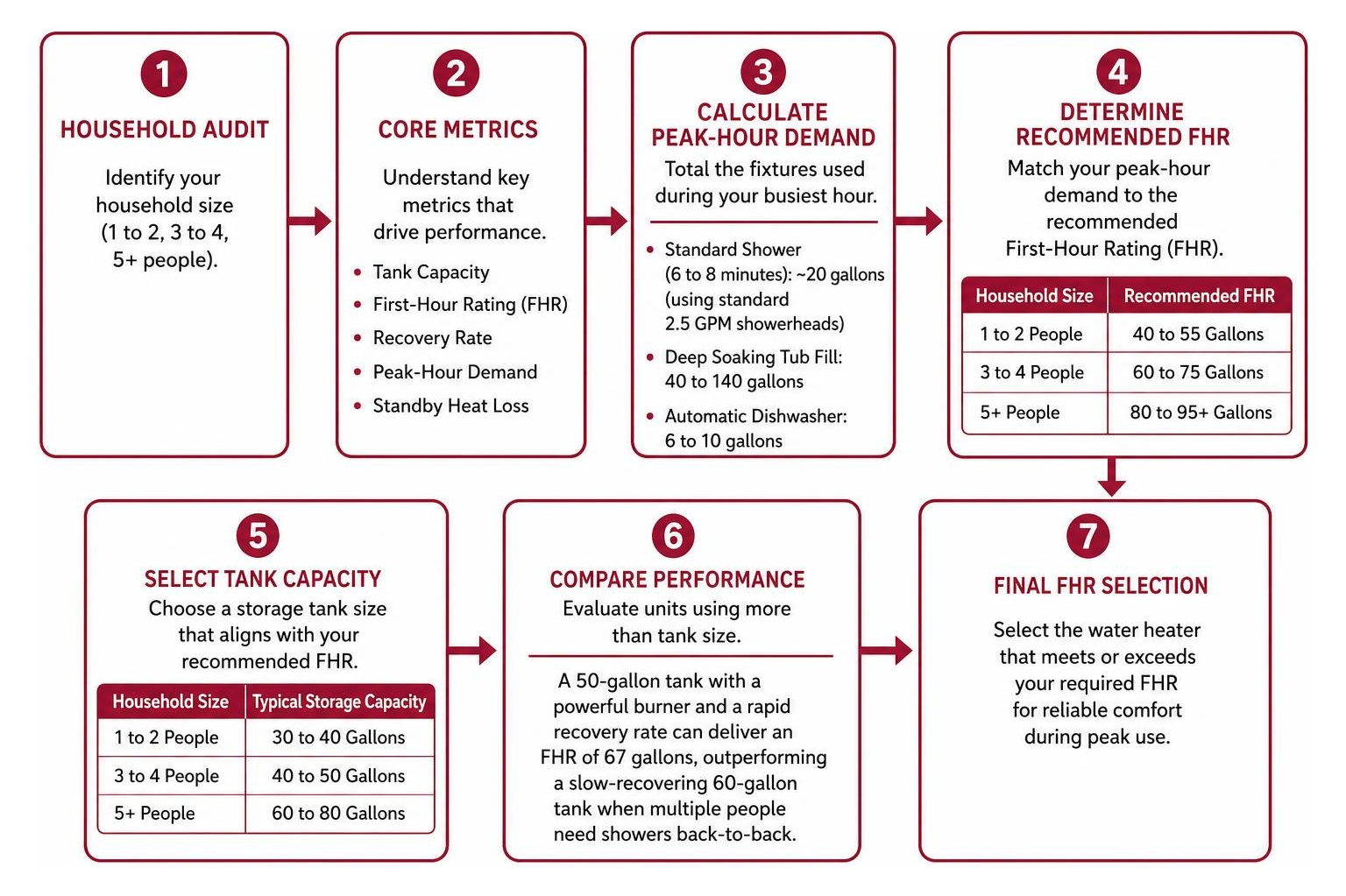
During a sizing assessment, a technician estimates hot water use during your busiest hour using fixture and appliance demand, such as the examples below:
- Standard Shower (6 to 8 minutes): ~20 gallons (using standard 2.5 GPM showerheads)
- Deep Soaking Tub Fill: 40 to 140 gallons
- Automatic Dishwasher: 6 to 10 gallons
- Clothes Washer (Warm/Hot Cycle): 20 to 25 gallons
- Bathroom/Kitchen Sink Handwashing: 2 to 4 gallons
Selecting a model that aligns with updated energy efficiency standards ensures standby heat losses are minimized, keeping operating costs low even during prolonged off-peak hours.
Tankless Water Heater Size Guide: GPM and Temperature Rise
Unlike storage units, tankless water heaters heat water on demand. Sizing a tankless system requires two factors: total required flow rate in gallons per minute (GPM) and the required temperature rise.
A technician assesses the combined flow of fixtures likely to operate simultaneously and the required temperature rise. For example:
A technician might assess two 2.5 GPM showerheads and a 1.5 GPM kitchen faucet as a combined demand of 6.5 GPM. The required temperature rise is the difference between incoming water temperature and the target output temperature; a 120°F / 49°C output target is used in the climate example below.
For household safety, keep in mind that at 130°F, water can cause serious burns to adult skin in roughly 30 seconds, whereas at 120°F, it takes more than 5 minutes to produce a similar scald injury.
Sizing by Fuel Type: Gas, Electric, and Hybrid Heat Pumps
The energy source powering your water heater dictates its recovery speed and the physical equipment footprint required.
- Natural Gas Water Heaters: Natural gas burners offer quick recovery rates. A high-recovery gas burner with an input between 50,000 and 70,000 BTU/h recovers hot water significantly faster than standard electric elements, delivering continuous supply during peak morning routines.
- Electric Resistance Water Heaters: Standard electric models rely on upper and lower heating elements (typically 3,800 to 4,500 watts). They take longer to recover cold water, meaning electric systems usually require a larger physical storage tank to buffer peak demand periods.
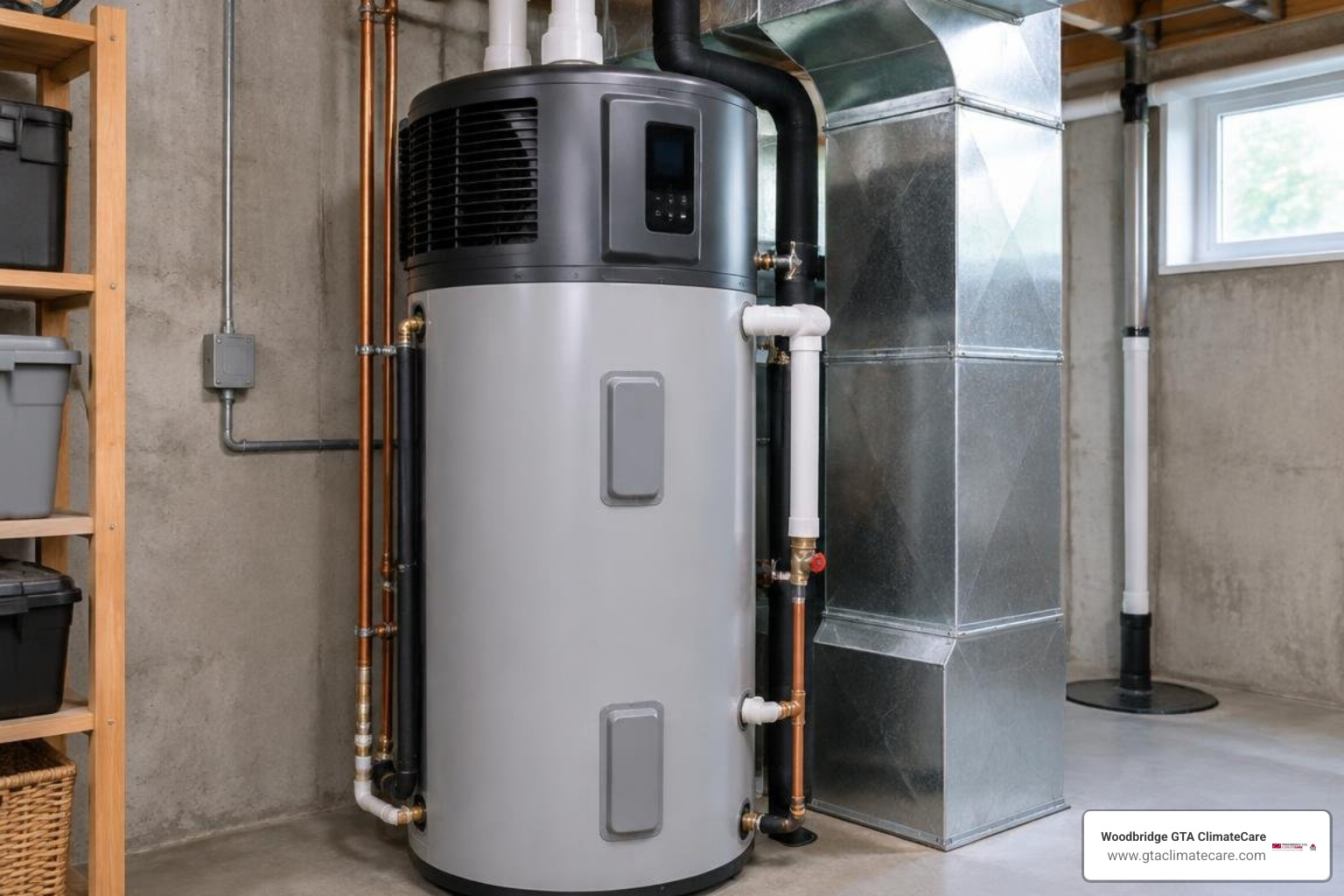
- Hybrid Heat Pump Water Heaters: Advanced heat pumps extract heat from surrounding ambient air to warm domestic water.
- Hydronic Combi Systems: For homes utilizing high-efficiency boilers, indirect water heaters or combined hydronic domestic systems deliver exceptional domestic hot water flow rates by leveraging the boiler's robust heating output.
Climate Impact: How Groundwater Temperatures Affect Sizing in Canada
Geography plays a major role in water heating performance. Incoming municipal groundwater temperatures in Canada drop dramatically during the winter, often plunging to 40°F (4°C) or lower across Ontario and the Greater Toronto Area.
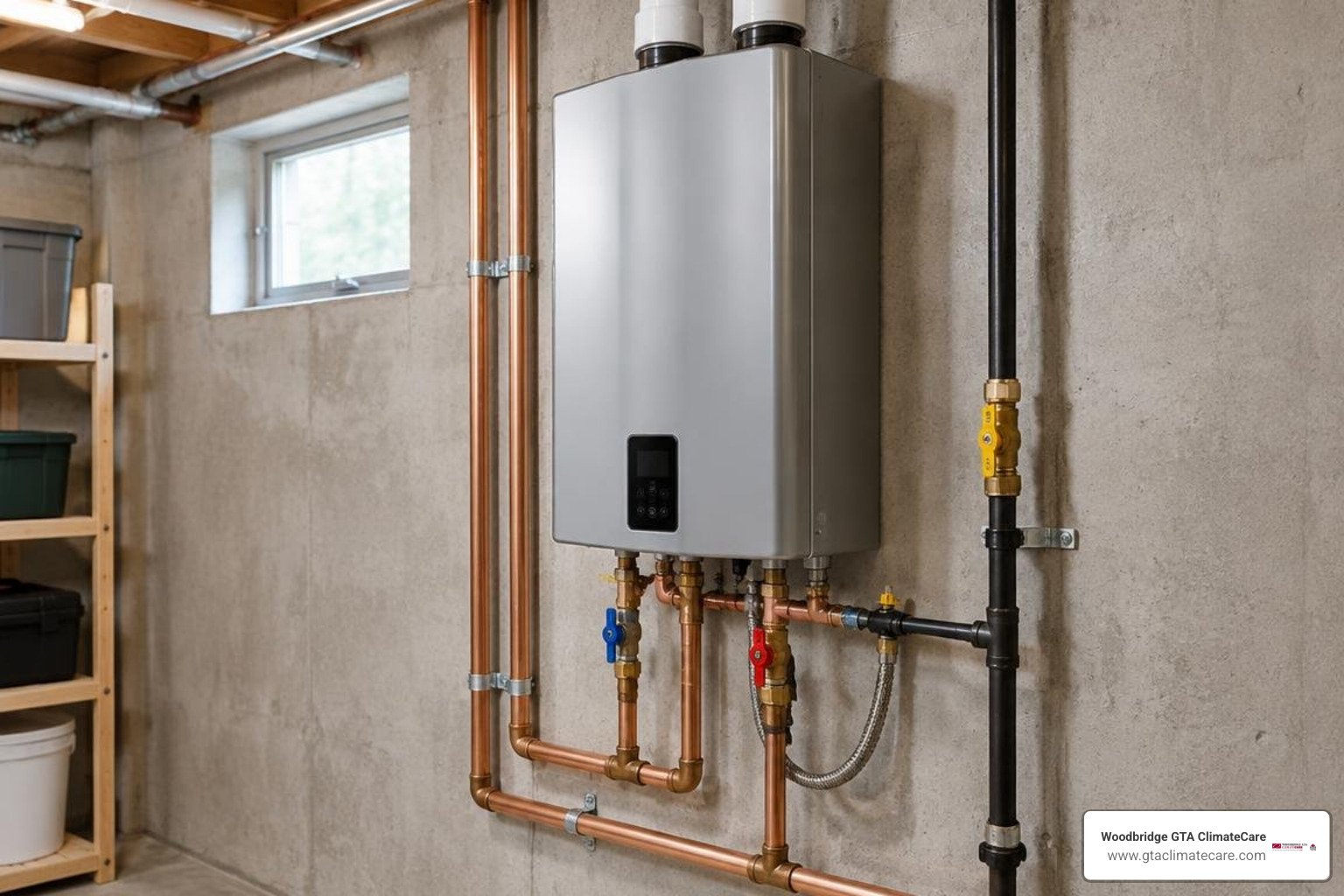
When incoming water is 40°F and your thermostat is set to 120°F, the system must produce an 80°F temperature rise. In warmer southern climates where groundwater stays at 65°F to 70°F, the system only needs a 50°F rise to hit that same target.
This steep temperature delta requires units in colder northern climates to be upsized by 10% to 20% in heating capacity or storage volume to deliver consistent flow rates and avoid capacity drop-offs during mid-winter cold snaps.
Consequences of Choosing an Incorrectly Sized Water Heater
Choosing the wrong water heater size creates performance issues and unnecessary expenses:
- Undersized Systems: Running an undersized heater forces the unit to work constantly, causing frequent cold showers and accelerating wear on elements, burners, and heat exchangers. In tankless units, exceeding flow limits causes water temperatures to fluctuate or triggers the "cold water sandwich" effect, where brief bursts of cold water enter the line.
- Oversized Systems: An oversized storage tank stores dozens of gallons of hot water that are never used, generating excess standby heat loss. In gas tankless setups, oversizing can cause burners to short-cycle, leading to inefficient fuel consumption and unnecessary wear.
Routine water heater maintenance, such as flushing sediment and inspecting sacrificial anode rods, helps prevent premature equipment failures regardless of unit size.
Commercial and High-Demand Water Heating Sizing Considerations
Commercial applications, such as restaurants, food production facilities, and multi-unit complexes, must follow strict health and plumbing regulations.
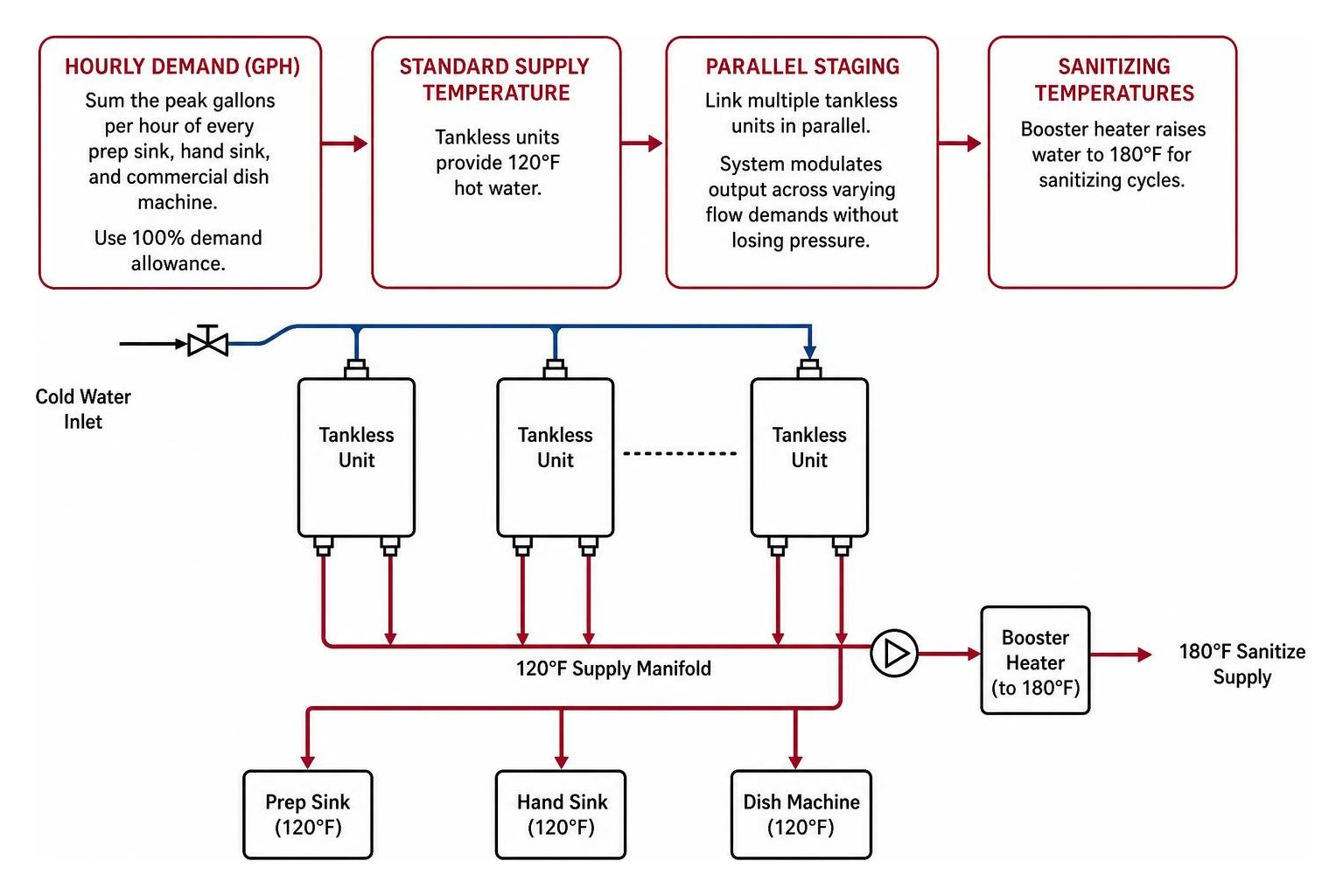
Commercial water heating demands involve unique specifications:
- Hourly Demand (GPH): Calculated by summing the peak gallons per hour of every prep sink, hand sink, and commercial dish machine, often using a 100% demand allowance for multiservice operations.
- Sanitizing Temperatures: Commercial sanitization cycles frequently mandate final rinse water at 180°F (82°C), requiring dedicated booster heaters to step temperatures up from standard 120°F supply lines.
- Parallel Staging: High-volume commercial settings often link multiple tankless units in parallel so the system can modulate output dynamically across varying flow demands without losing pressure.
Frequently Asked Questions about Sizing a Water Heater
What size water heater is recommended for a family of four?
For a typical four-person home with two full bathrooms, a 50-gallon gas storage tank with an FHR of 65 to 75 gallons is the standard recommendation. For a tankless system, a Woodbridge GTA ClimateCare technician can assess simultaneous fixture demand and winter temperature rise before recommending a model.
Why does my water heater run out of hot water so fast?
Running out of hot water quickly usually points to a low first-hour rating, an undersized burner, or excessive simultaneous hot water use. Heavy sediment accumulation at the bottom of the tank can also displace water volume and insulate the water from the heat source, severely slowing recovery.
Can a high-BTU water heater replace a larger storage tank?
Yes. A high-recovery gas water heater featuring an input of 50,000 to 70,000 BTU/h heats cold water rapidly, delivering superior first-hour performance from a compact 40- or 50-gallon tank and often outperforming a basic 75-gallon unit with a low-input burner.
Conclusion
Getting your water heater sized correctly ensures reliable hot water delivery and keeps household utility costs in check. Whether you are upgrading an older tank, switching to high-efficiency tankless, or installing a hybrid heat pump, balancing your household's peak demand with local groundwater temperatures is essential.
Our team at Woodbridge GTA ClimateCare brings over 50 years of family-owned, locally focused service across the Greater Toronto Area to ensure your system is properly evaluated and installed. Backed by our 100% satisfaction guarantee and comprehensive WeCare maintenance plans, we help you find the right system for your home's needs.
Contact us today to schedule a water heater sizing consultation with our licensed technicians.