Why Geothermal HVAC Upfront Costs Pay Off in the Long Run
What Does Geothermal HVAC Cost to Install in 2026?
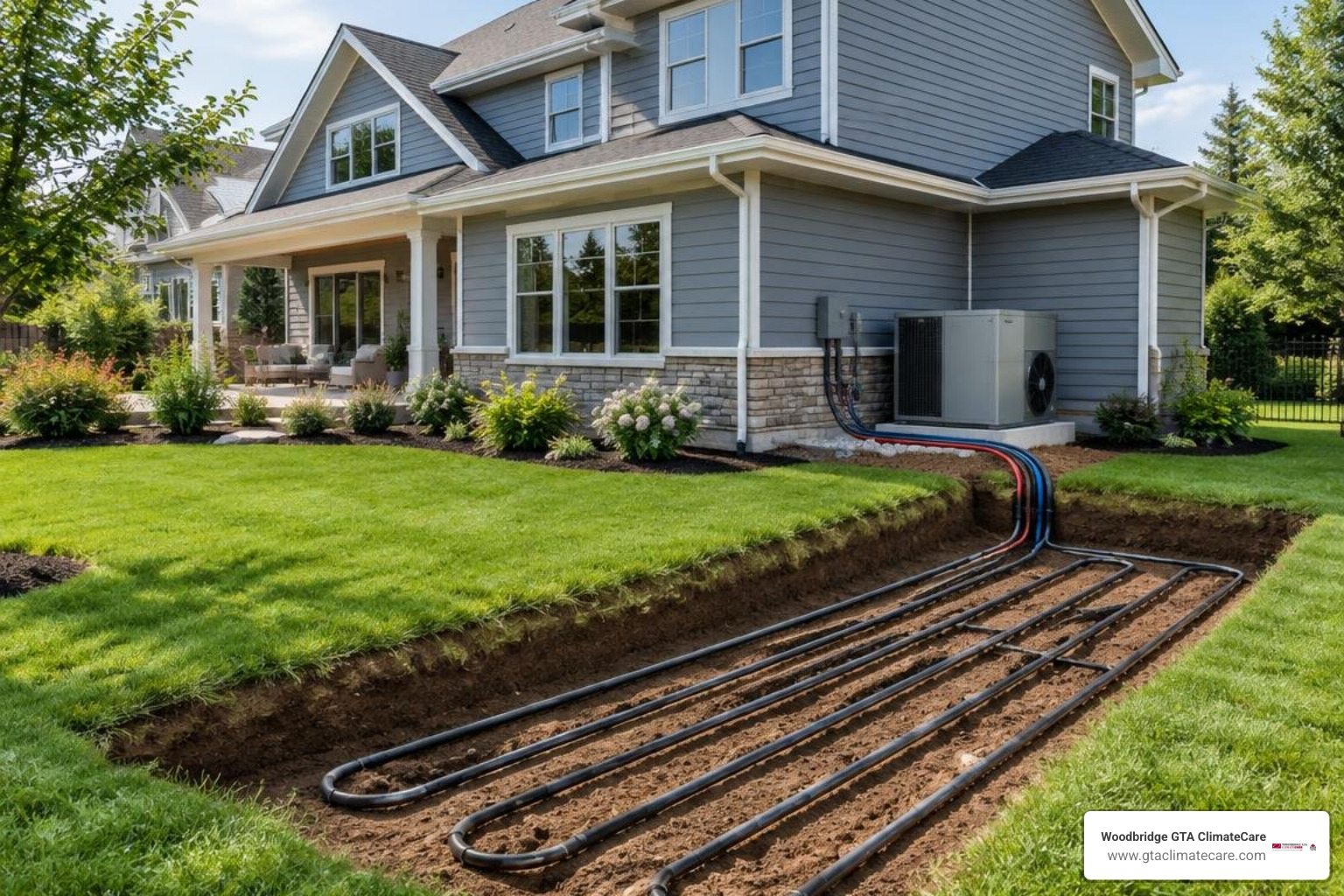
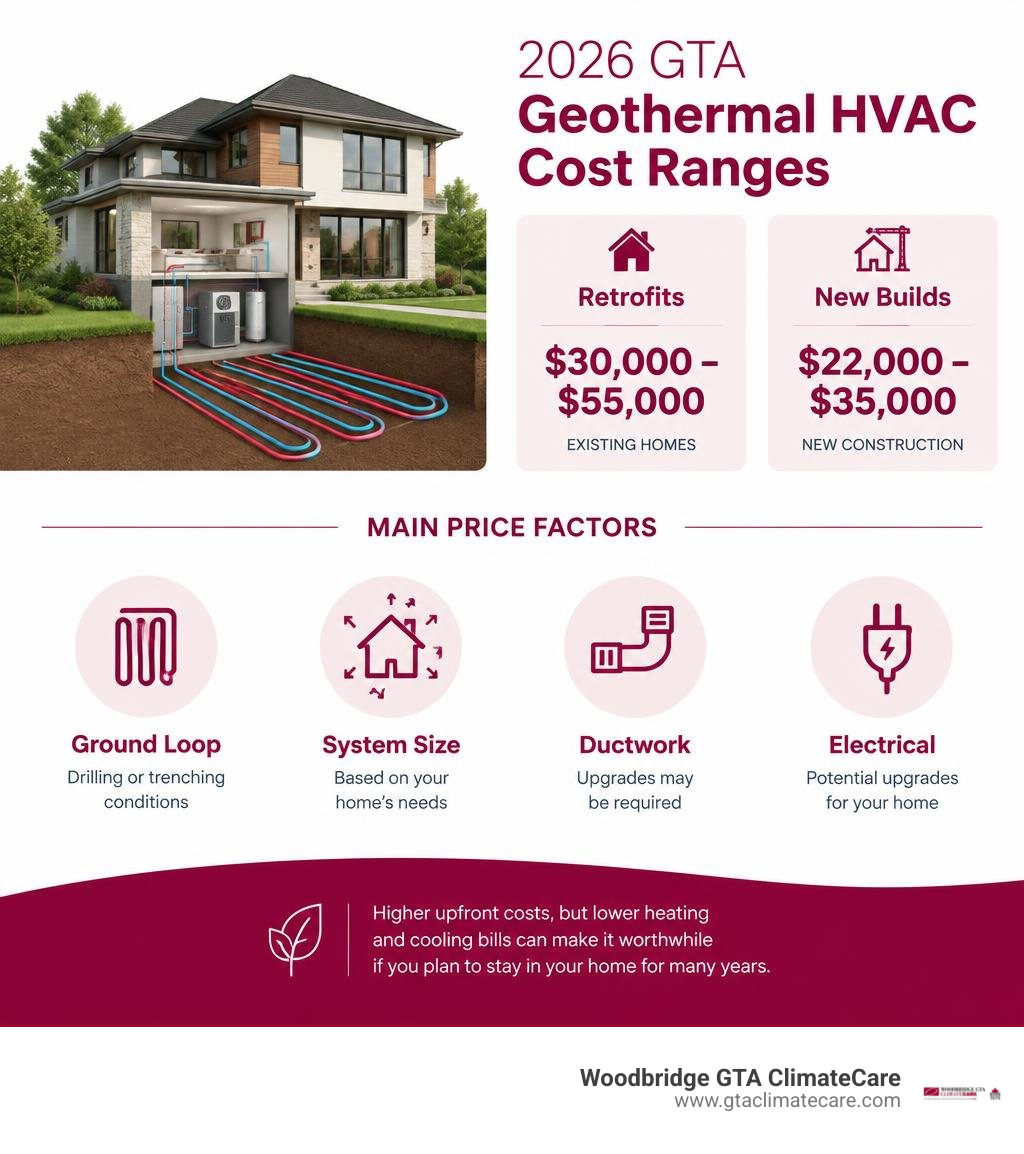
In the Greater Toronto Area, the cost to install geothermal hvac is a planning estimate of $30,000–$55,000 for an existing home or $22,000–$35,000 for a new build in 2026. Your quote depends most on the ground loop, drilling or trenching conditions, system size, and any ductwork or electrical upgrades. The upfront cost is high, but lower heating and cooling bills can make it worthwhile if you plan to stay in your home for many years.
Our team at Woodbridge GTA ClimateCare will help you understand the cost to install geothermal HVAC, starting with what drives the price.
Average Cost to Install Geothermal HVAC Systems in 2026
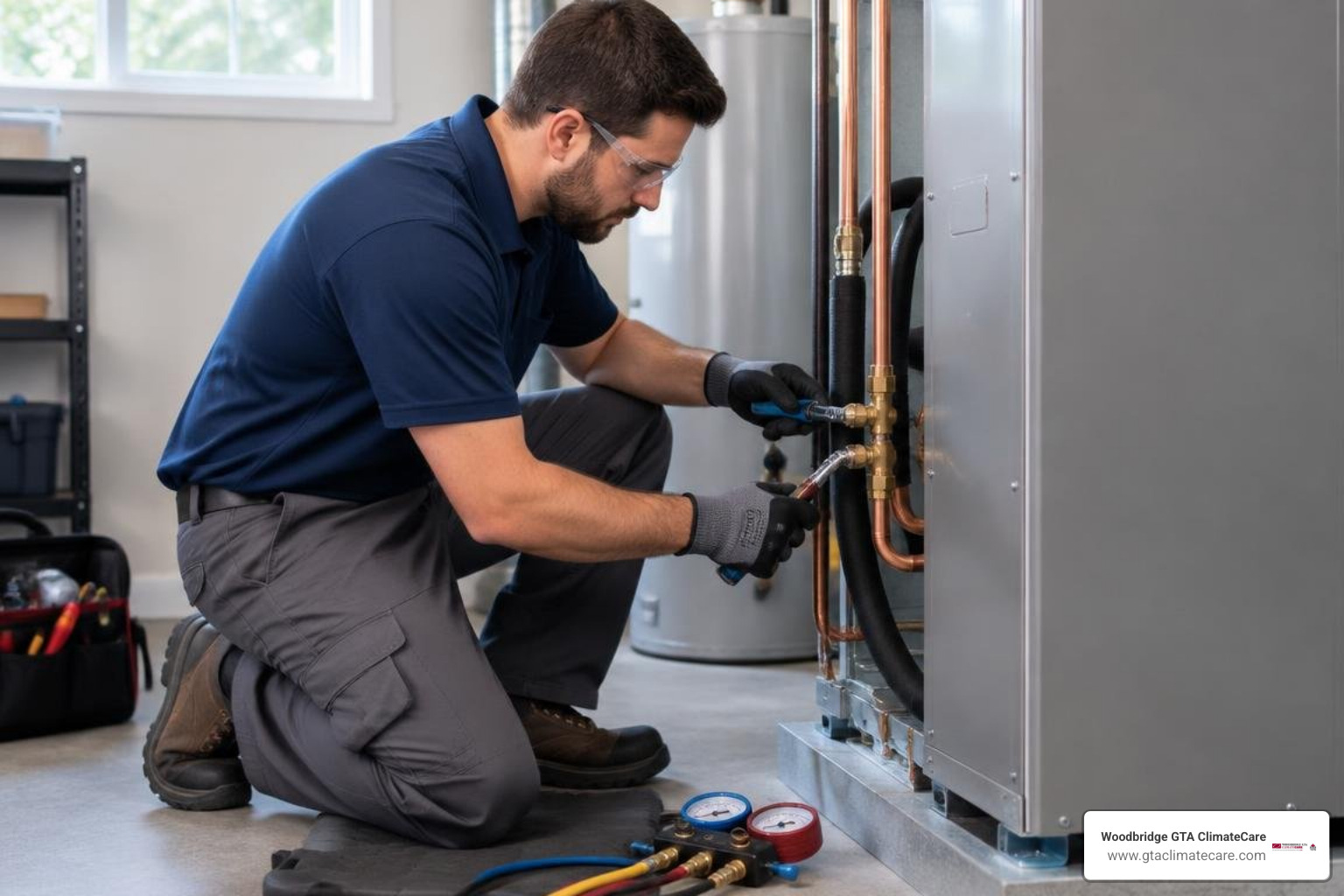
For homeowners in Woodbridge, Vaughan, and the Greater Toronto Area, installation costs depend on system size, loop design, site conditions, and retrofit requirements. When you examine a comprehensive geothermal quotation, the overall expenditure separates into two major financial categories: the indoor mechanical heating and cooling machinery, and the subterranean ground loop construction.
The ground loop and its associated excavation or drilling represent roughly 45% to 55% of the total project investment. System capacity is measured in tons of heating and cooling output, with one ton equaling 12,000 BTUs per hour. A standard 2,000 to 2,500 square-foot home in our climate generally requires a 3-ton to 4-ton system. Because ground-source equipment extracts heat from stable subterranean temperatures rather than frigid outdoor winter air, proper capacity sizing ensures the system delivers outstanding seasonal performance without unnecessary equipment expenses.
Understanding the Base Cost to Install Geothermal HVAC Equipment
The mechanical heart of the system is the indoor ground-source unit, which typically accounts for $5,500 to $7,500 of the total equipment expenditure. Unlike standard combustion equipment, modern energy-efficient heat pumps operate at extraordinary efficiency levels, delivering 300% to 600% energy output relative to electrical input. In technical terms, this means a Coefficient of Performance (COP) between 3.0 and 6.0, generating three to six units of clean heat for every single unit of electrical energy consumed.
Many premium ground-source heat pump models also feature an integrated desuperheater. This auxiliary heat exchanger captures excess thermal energy generated during heating and cooling cycles and transfers it directly to your domestic hot water tank. By producing supplemental domestic hot water virtually for free during peak heating and cooling months, an integrated desuperheater further lowers monthly utility expenses.
Labor, Excavation, and Site Preparation Expenses
The subterranean infrastructure requires specialized site excavation, directional boring, or deep borehole drilling that cannot be performed by standard mechanical crews. Qualified installers follow strict International Ground Source Heat Pump Association (IGSHPA) standards to guarantee pipe fusion integrity, correct loop flow balancing, and proper borehole grouting.
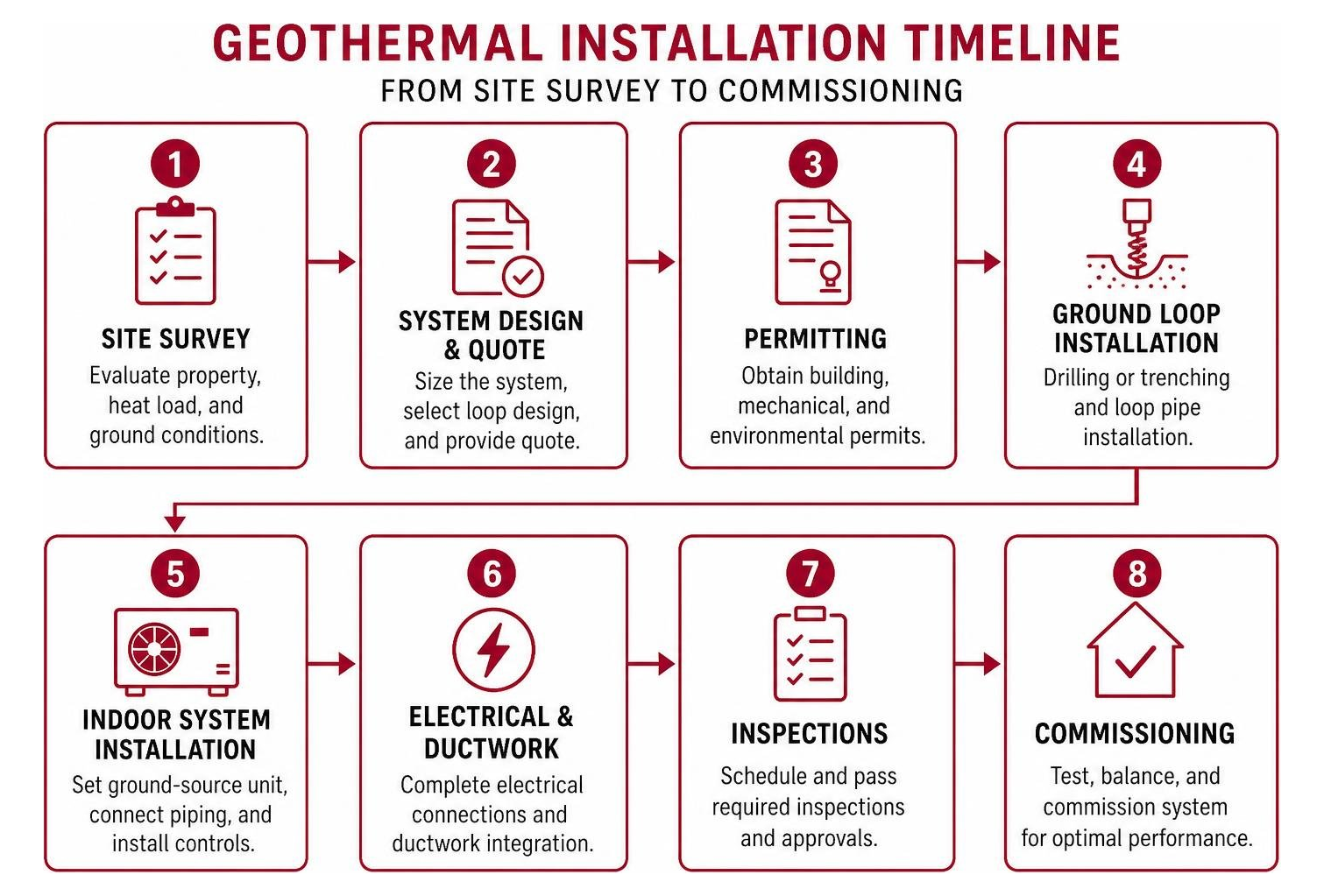
The non-equipment portion of a geothermal estimate encompasses several trades:
- Trenching and Drilling Labor: Specialized heavy machinery operators for backhoes or rotary drill rigs.
- Electrical Connections: Certified electrical work to wire high-voltage circuits, auxiliary heat strips, and system controls.
- Ductwork Integration: Connecting the high-capacity indoor blower to the existing or newly installed air distribution network.
- Permitting and Inspections: Municipal building permits, mechanical permits, and environmental water-table filings.
Ground Loop Configurations and Their Price Impact
The specific ground loop design chosen for your property is the single largest determinant of total project cost. The selected layout determines drilling depth, thermal heat transfer effectiveness, land disturbance, and the type of machinery required.
| Loop Configuration | Land / Space Needed | Best Suited For | Key Advantages |
|---|---|---|---|
| Horizontal Closed-Loop | 1,500–3,000 sq ft per ton | Rural properties, large acreages | Lower excavation cost per foot; uses standard backhoes |
| Vertical Closed-Loop | Small yard footprint (15–20 ft spacing) | Urban and suburban lots with tight clearances | Deep thermal stability; minimal surface disruption |
| Pond / Lake Closed-Loop | Deep water body (minimum 8 ft depth) | Waterfront homes and rural acreage | No ground trenching; strong aquatic heat transfer |
| Open-Loop (Well Water) | High-capacity supply and return wells | Areas with abundant clean groundwater | Excellent heat exchange rates; lower initial loop piping needs |
Horizontal Closed-Loop Systems
Horizontal closed loops are the most economical option when adequate yard space is available. Contractors use standard excavators or trenchers to dig parallel trenches 4 to 6 feet deep, laying durable high-density polyethylene (HDPE) pipes in continuous circuits or slinky-style overlapping coils.
Because horizontal systems require between 1,500 and 3,000 square feet of unobstructed open land per ton of capacity, they are rarely feasible on standard suburban residential lots. However, for spacious rural properties across Southern Ontario, horizontal trenches keep total installation expenses closer to the $15,000 to $25,000 mark.
Vertical Closed-Loop Systems
When surface area is constrained, vertical closed-loop boreholes are the primary solution. Specialized drilling rigs bore vertical holes 150 to 400 feet deep into the earth. Installers insert U-shaped HDPE pipes into each borehole and pump a specialized bentonite thermal grout mixture around the pipe to seal the opening and facilitate heat transfer with surrounding bedrock.
Vertical drilling generally costs between $20 and $35 per foot, and difficult rocky formations can add drilling surcharges. While vertical systems involve higher installation pricing, they provide exceptional efficiency and preserve property grounds, as discussed in research on geothermal integration.
Pond/Lake and Open-Loop Alternatives
If your property borders an adequate body of water that maintains a minimum depth of 8 feet year-round to prevent freezing, a submerged pond loop can significantly reduce excavation labor. Coils of closed-loop pipe are floated out onto the water, anchored, and submerged to rest near the bottom where water density stabilizes at cold temperatures.
Open-loop systems draw groundwater directly from an extraction well, cycle it through the heat pump's heat exchanger, and discharge it into a dedicated return well or drainage field. While open loops boast lower upfront piping costs, they are subject to local groundwater chemistry regulations, potential mineral scaling, and strict aquifer protection guidelines.
Key Variables Driving Your Total Installation Price
System sizing begins with an exhaustive room-by-room calculation following Manual J load design principles. This assessment considers your home’s square footage, wall insulation levels, window glazing, ceiling heights, air leakage, and local winter design temperatures.
Why Retrofits Alter the Real Cost to Install Geothermal HVAC
Installing a geothermal system during new construction is straightforward because loop trenches can be excavated alongside foundation work and mechanical chases are planned in advance. Retrofitting an existing residence, however, introduces several structural and electrical variables that alter total expenses:
- Airflow and Ductwork Modifications: Geothermal heat pumps circulate a higher volume of air at gentler supply temperatures compared to the concentrated, scorching air of a gas furnace. Existing supply and return duct trunks often require sheet-metal modifications, plenum adjustments, or return grille expansions to maintain balanced static pressure.
- Electrical Service Upgrades: Modern geothermal heat pumps equipped with internal auxiliary heating elements frequently require a 200-amp electrical service panel.
- Landscape and Structural Restoration: Bringing heavy drilling rigs across established yards can require temporary fence removals, tree protection, and subsequent lawn regrading or sodding.
When evaluating an older home where extensive duct overhaul proves cost-prohibitive, exploring alternative furnace installation considerations helps you determine the most practical long-term heating pathway.
Soil Composition and Regional Geology
The geological makeup beneath your topsoil directly influences drilling speed, tooling wear, and heat transfer efficiency. Softer sedimentary soils and moist clay conduct heat well and allow for relatively swift vertical drilling. Conversely, dense glacial till, caliche deposits, or hard Canadian Shield granite require heavy-duty pneumatic hammer drills, which can add $10 to $20 per linear foot in specialized drilling surcharges.
Payback Period and 25-Year Lifecycle Savings
Geothermal systems typically reduce heating and cooling energy consumption by 40% to 60% compared to conventional combustion systems and standard air conditioners. Depending on local utility rate structures and prior fuel sources (such as heating oil, propane, or baseboard electric heat), annual household energy savings consistently range between $800 and $2,200 per year.
System longevity is where geothermal economics stand out:
- Indoor Heat Pump Unit: 20 to 25+ years of reliable operational life (compared to 12 to 15 years for standard air conditioners and 15 to 18 years for gas furnaces).
- Subterranean Ground Loop: 50+ years of maintenance-free service life.
Once the initial ground loop is buried, it represents permanent home infrastructure that can outlast several generations of indoor mechanical equipment.
Canadian Incentives and Rebates
For a geothermal project in Ontario, confirm which Canadian incentives are currently available, whether your project qualifies, and whether any offers can be combined before including them in your budget.
For GTA homeowners, payback depends on installation costs, the heating system being replaced, local energy rates, and any confirmed incentives. Homeowners can review current clean energy rebate offers and explore financing options through our Enbridge Sustain partnership options to make clean-energy equipment upgrades budget-friendly.
Geothermal vs. Cold-Climate Air-Source Heat Pumps
A primary question for modern homeowners is whether to invest in geothermal or opt for an advanced cold-climate air-source heat pump (ccASHP). Modern cold-climate air-source systems cost significantly less to install—typically $11,000 to $20,000 fully installed—because they extract thermal energy from outdoor air without any ground excavation.
While cold-climate air-source models perform efficiently even in sub-zero conditions, geothermal systems maintain steady efficiency regardless of how cold the outdoor air gets because ground temperatures remain stable year-round. They also deliver exceptional high-efficiency heat pump cooling and humidity control throughout humid summer months.
Frequently Asked Questions About Geothermal HVAC Costs
How long does it take for a geothermal system to pay for itself?
A residential geothermal heat pump generally achieves full financial payback within 10 to 18 years, depending on the fuel source being displaced, local utility electricity rates, and available utility grants. Homeowners switching away from expensive delivered fuels such as propane or heating oil often see payback in as little as 6 to 9 years due to annual energy savings exceeding $2,000.
Do geothermal systems require backup heating in freezing climates?
Because deep underground temperatures remain between 45°F and 55°F (7°C to 12°C) throughout the coldest winter months, geothermal systems do not suffer from the cold-weather capacity drops seen in standard air-to-air systems. However, most residential installations include an integrated electric resistance auxiliary heater (or dual-fuel backup configuration) inside the air handler to assist during extreme weather events or emergency servicing.
What ongoing maintenance costs should homeowners expect?
Geothermal systems require remarkably little ongoing maintenance because all critical components are shielded indoors or buried safely underground away from rain, snow, debris, and extreme ambient temperature shifts. Homeowners should change air filters regularly, monitor closed-loop system fluid pressure, and arrange for seasonal scheduled heat pump maintenance. Enrolling in comprehensive equipment protection plans ensures your heating and cooling equipment receives routine inspections, priority emergency response, and scheduled tune-ups.
Maximizing Your Return on Geothermal HVAC
Investing in a geothermal HVAC system requires a higher upfront financial commitment than conventional heating and air conditioning replacements, but it delivers reliable long-term efficiency, lower monthly utility bills, and decades of dependable comfort. With indoor mechanical components engineered to last 20 to 25 years and ground loop infrastructure built for 50 or more years, geothermal is a lasting upgrade to your home's energy performance.
To maximize your return on investment, ensure your system is properly engineered using detailed Manual J load calculations, installed according to strict IGSHPA guidelines, and configured with all available regional utility rebates.
For over 50 years, our family-owned team at Woodbridge GTA ClimateCare has delivered high-quality residential and commercial heating, cooling, and air-quality solutions across the Greater Toronto Area. Backed by our 100% satisfaction guarantee, we are ready to help you navigate your home comfort options. Contact us today to schedule your personalized home heating and cooling consultations with our local HVAC experts.