5 Critical Factors That Drive Ducted Mini Split Cost Up or Down
Ducted Mini Split Cost: What to Budget
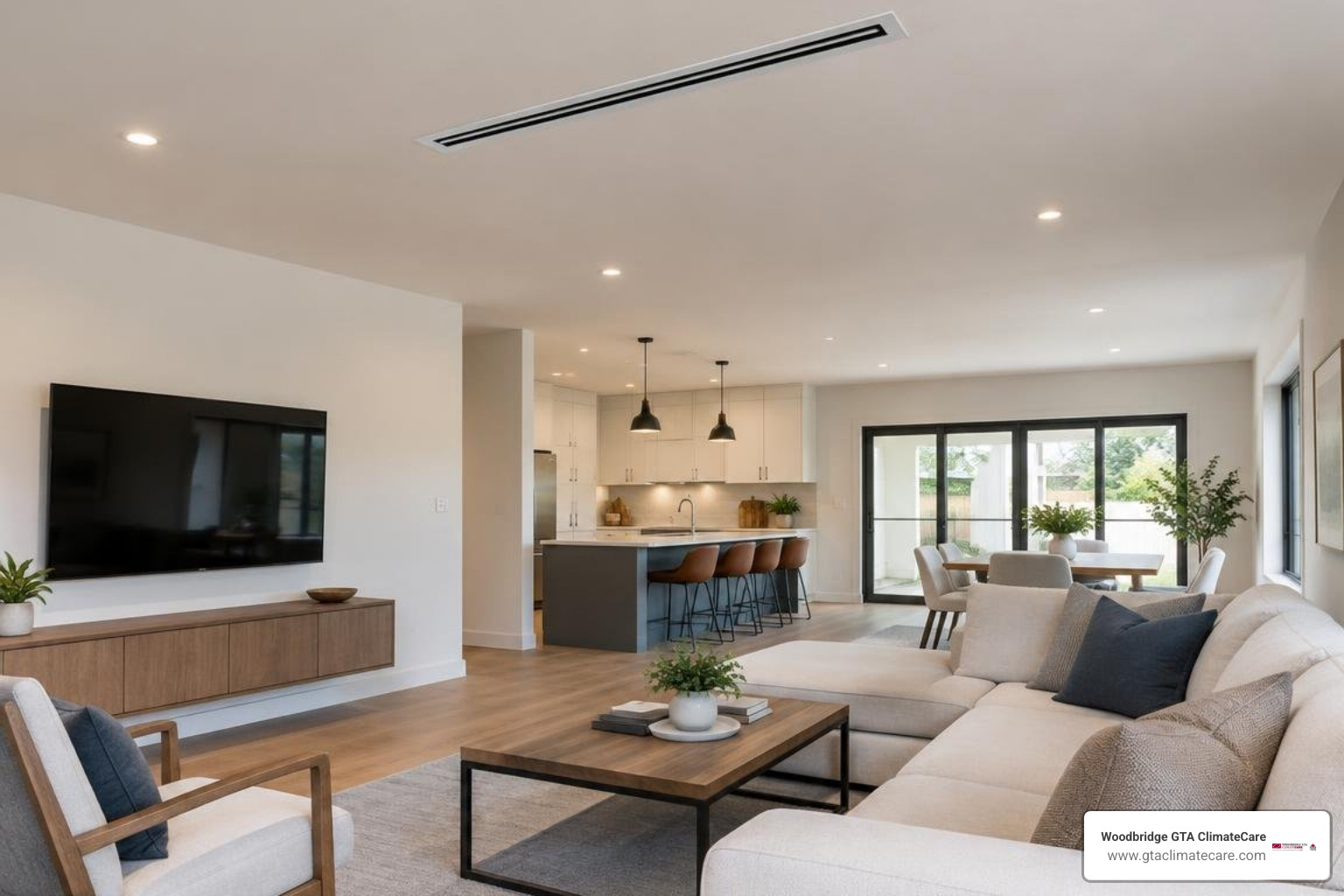
Ducted mini split cost depends on more than the unit itself. For homes in Woodbridge, Vaughan, and across the Greater Toronto Area, ask for a detailed estimate that separates the equipment, labour, ductwork, electrical work, and any ceiling repairs. New or hard-to-reach ducts can change the total substantially.
The cheapest-looking quote is not always the cheapest finished job. Check what is excluded before comparing prices.
At Woodbridge GTA ClimateCare, our experienced HVAC team can help you understand ducted mini split cost, spot the work behind the price, and compare quotes with confidence.
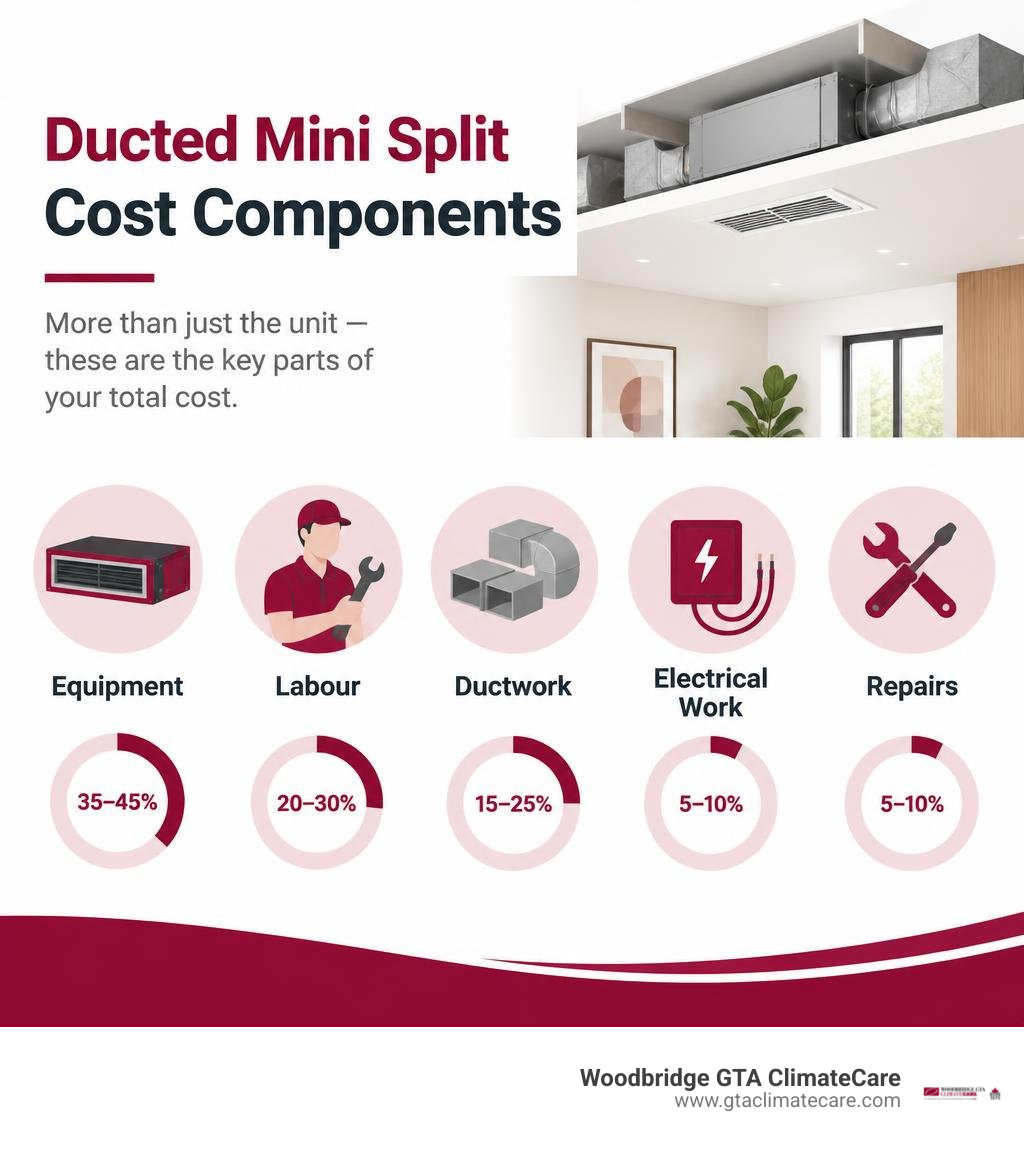
Comprehensive Ducted Mini Split Cost Breakdown
When evaluating estimates for a ducted mini split system, understanding the individual financial pieces prevents unpleasant surprises. A ducted mini split combines the high-efficiency inverter compressor of a ductless system with short runs of hidden ductwork that deliver conditioned air through discreet ceiling or wall vents.
For Woodbridge, Vaughan, and the Greater Toronto Area, treat the figures below as planning ranges , not fixed quotes. A ducted mini split installation may fall around $4,500 to $5,500 per ton for straightforward work, while wall-mounted ductless systems may run closer to $3,500 to $4,000 per ton . A whole-home ducted heat-pump system with matched air handlers can range from roughly $6,000 to $14,000 for mid-efficiency equipment; premium variable-speed systems with extensive duct modifications can exceed $15,000 to $20,000 before applicable rebates. Final pricing depends on the home's load calculation, duct access, electrical capacity, equipment selection, and finishing work.
The total investment divides across four main categories:
- Equipment (40%–50% of total): The outdoor variable-speed inverter condenser, concealed ceiling or attic air handlers, expansion valves, and digital thermostats.
- Labour and Installation (25%–35% of total): Skilled trades for refrigerant charging, vacuum testing lines, mounting units, and setting up condensate drainage.
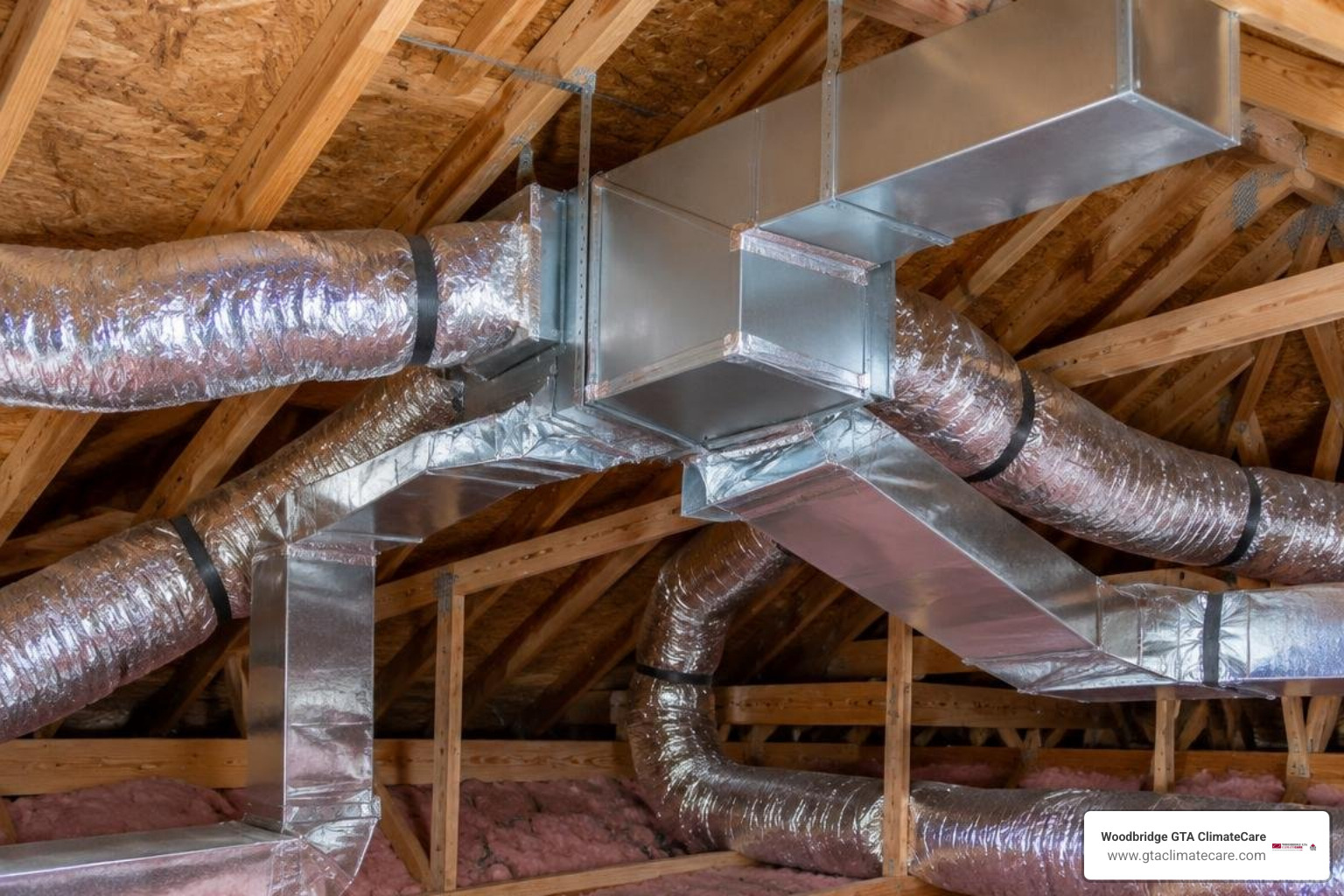
- Ductwork and Distribution (15%–25% of total): Sheet metal fabrication, insulated flexible ducting, supply grilles, return air plenums, and balancing dampers.
- Electrical and Infrastructure (5%–10% of total): Dedicated 208/230V breakers, outdoor disconnect switches, wiring whips, and communication cables between units.
| Configuration Level | Typical Tonnage | Best Suited For |
|---|---|---|
| Single-Zone Concealed Ducted | 0.75–1.5 tons | Open-concept main floors, primary suites, and home additions |
| 2-Zone to 3-Zone Ducted | 2.0–3.0 tons | Multi-level townhomes and zoned bungalow layouts |
| Whole-Home Multi-Zone Ducted | 3.5–5.0 tons | Detached homes of 2,000+ sq. ft. replacing fossil-fuel systems |
When comparing equipment, it helps to understand air handler vs heat pump differences, costs, efficiency, and best uses. If you are replacing an indoor unit on an existing ducted loop, standalone air handler replacements generally run $1,500 to $4,500 installed, depending on the blower motor design and required transitions.
Single-Zone vs. Multi-Zone System Pricing
A single-zone ducted mini split connects one outdoor condenser to a single concealed indoor air handler. That air handler can feed air to one large space or split its output across two or three adjacent rooms (such as two bedrooms and a bathroom) via short duct runs. Single-zone setups are cost-effective because they eliminate the need for complex refrigerant branch boxes or multi-port outdoor units.
Multi-zone systems connect multiple concealed ducted units (or a mix of concealed ducted and ductless air conditioner heads) to a single large outdoor heat pump. Multi-zone systems increase equipment costs because the outdoor unit requires advanced valving to modulate refrigerant flow to each zone independently.
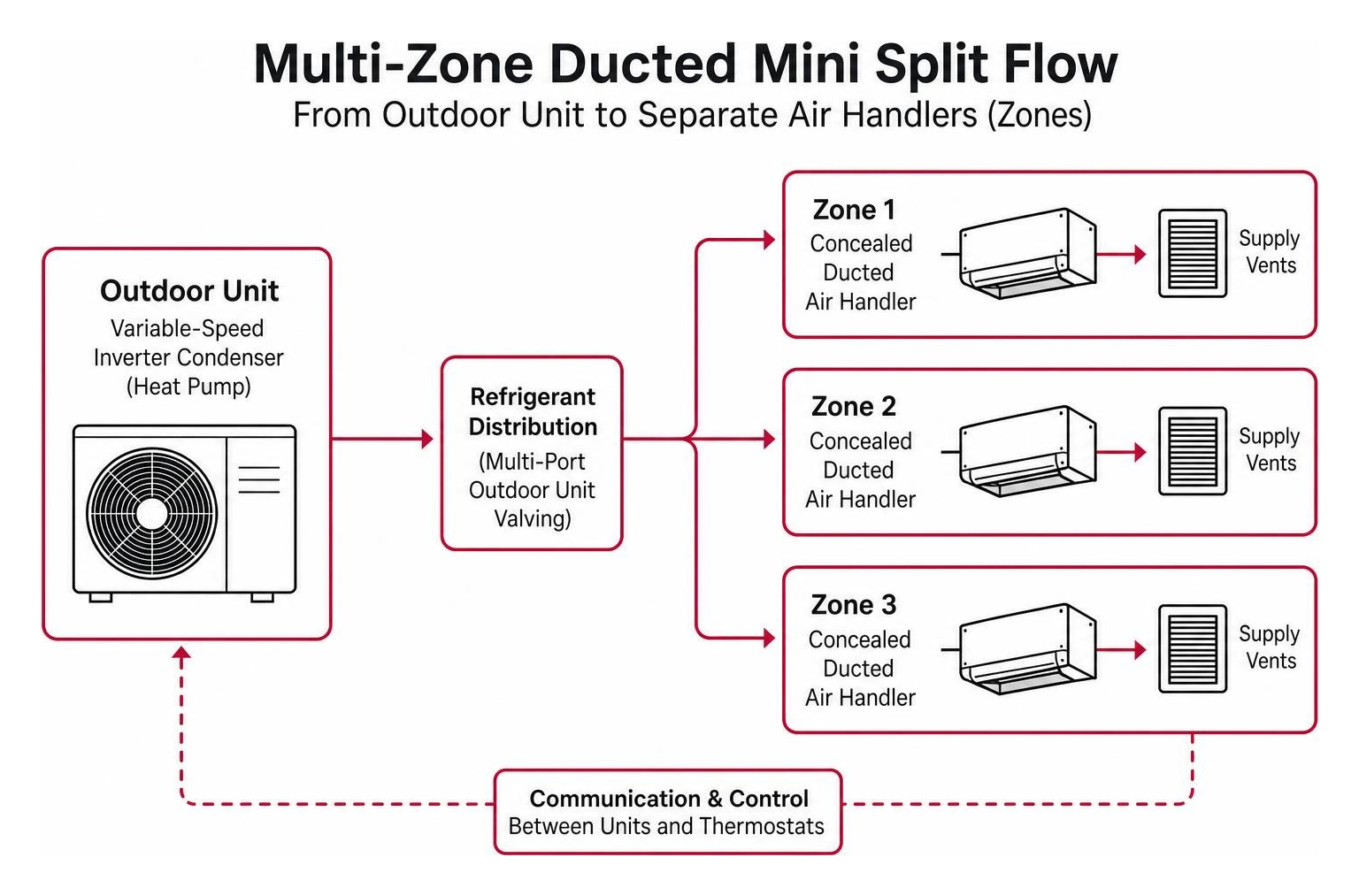
While multi-zone systems offer room-by-room temperature control, they require careful capacity planning. Over-sizing individual indoor units can cause the compressor to short-cycle at low demand, lowering seasonal efficiency.
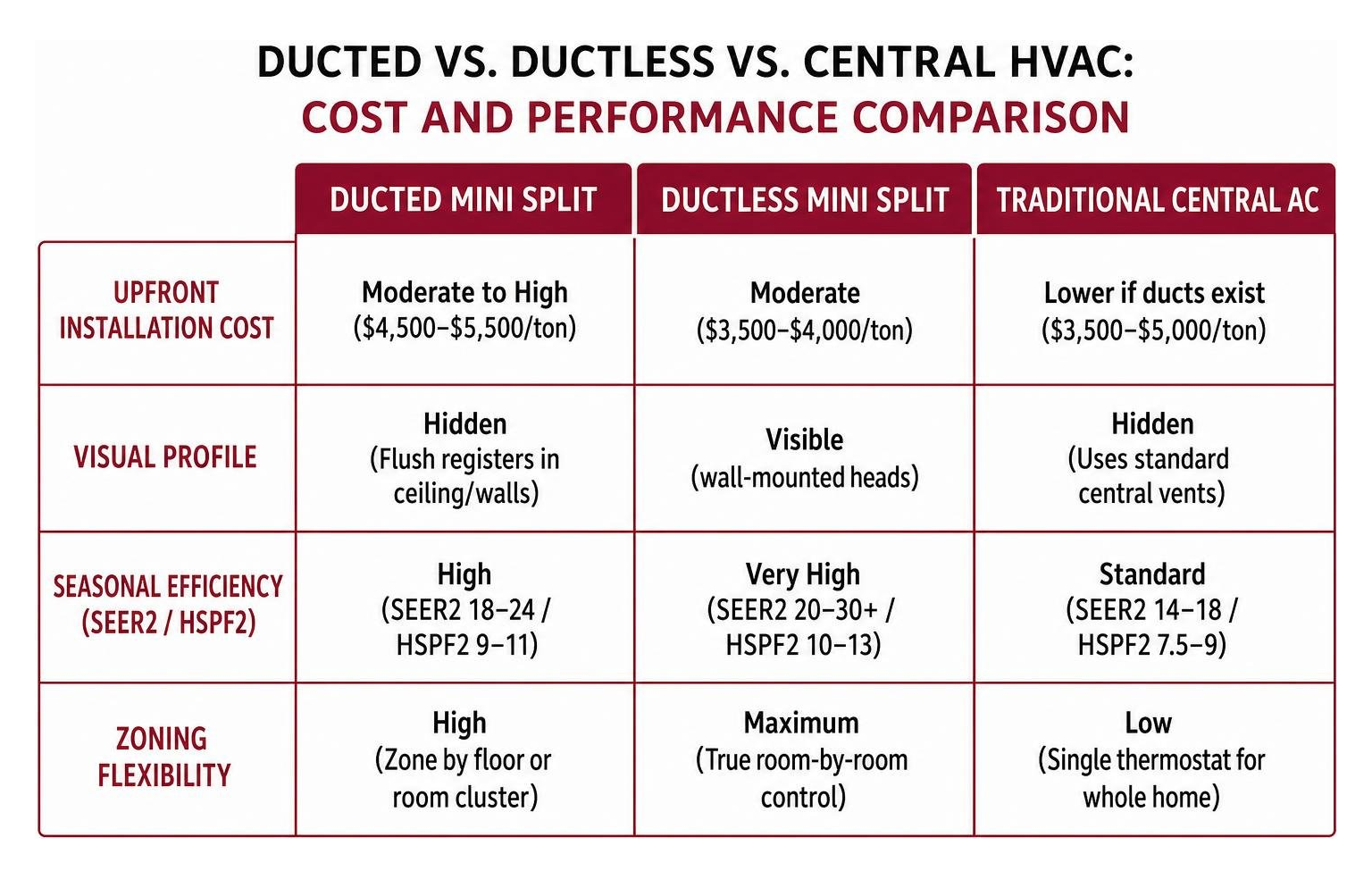
Ducted vs. Ductless vs. Central HVAC: Cost and Performance Comparison
Choosing the best HVAC design involves balancing upfront capital costs, visual aesthetics, and home architecture.
| System Type | Upfront Installation Cost | Visual Profile | Seasonal Efficiency (SEER2 / HSPF2) | Zoning Flexibility |
|---|---|---|---|---|
| Ducted Mini Split | Moderate to High ($4,500–$5,500/ton) | Hidden (Flush registers in ceiling/walls) | High (SEER2 18–24 / HSPF2 9–11) | High (Zone by floor or room cluster) |
| Ductless Mini Split | Moderate ($3,500–$4,000/ton) | Visible wall-mounted heads | Very High (SEER2 20–30+ / HSPF2 10–13) | Maximum (True room-by-room control) |
| Traditional Central AC | Lower if ducts exist ($3,500–$5,000/ton) | Hidden (Uses standard central vents) | Standard (SEER2 14–18 / HSPF2 7.5–9) | Low (Single thermostat for whole home) |
Homeowners who want high efficiency without mounting large plastic cassettes on their walls often find concealed ducted units the ideal compromise. Reviewing the 4 types of heat pumps: costs, pros and cons can help determine which physical architecture best matches your property. For optimal summer performance, properly designed heat pump cooling can match or exceed the comfort of traditional central air conditioning while using less energy.
Ductwork Retrofit Costs vs. Going Ductless
If your home currently relies on hydronic radiators, baseboard heaters, or radiant ceiling cables, it has no existing ductwork. Retrofitting a traditional central air system requires building large vertical chases through closets and boxing out living spaces, easily adding $5,000 to $12,000 in carpentry and drywall work alone.
Concealed ducted mini splits minimize this disruption. Because their air handlers are compact (often only 8 to 11 inches high), they fit neatly into drop ceilings, closets, crawlspaces, or unconditioned attics.
For older architectural properties with structural limitations, Unico hi-velocity air conditioning offers an alternative approach. Small-duct systems use flexible mini-ducts that weave through wall cavities without requiring structural demolition. If you are exploring options for a historic property, see how Unico air conditioners modernize HVAC in older homes without compromising original millwork.
Cold-Climate Performance and Inverter Technology Costs
In the Greater Toronto Area, heating performance at sub-zero temperatures is just as essential as summer cooling. Standard heat pumps lose capacity as the outdoor temperature drops below freezing. Cold-climate heat pumps (CCHPs), however, use variable-speed inverter compressors and flash-injection technology to maintain full heating capacity down to -15°C (5°F) and continue operating down to -25°C (-13°F) or colder.
Cold-climate equipment carries a 15% to 25% equipment premium over standard heat pumps. However, this upgrade reduces or eliminates the need for expensive auxiliary electric resistance heat strips, lowering your monthly winter utility bills. For real-world budget ranges on high-efficiency equipment, see this breakdown of heat pump installation cost in 2026.
Key Variables and What Affects Your Installation Quote
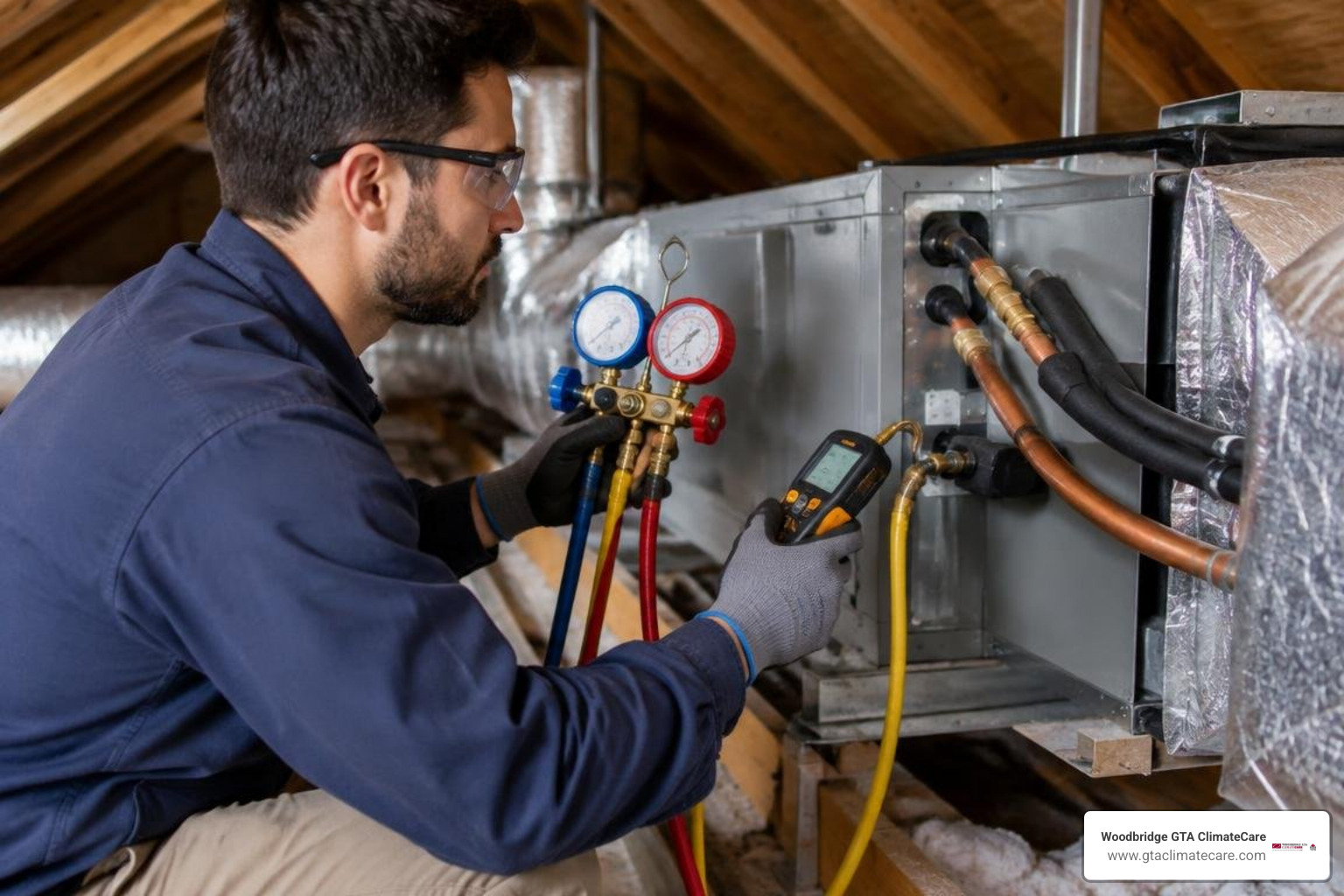
When reviewing contractor estimates, quotes for similar homes can vary significantly. Understanding the underlying cost drivers ensures you can evaluate bids fairly.
Key factors that determine installation pricing include:
- Static Pressure Requirements: Concealed ducted units are designed for specific static pressure ranges (low, medium, or high static). Complex duct runs with multiple bends require higher-static units, which cost more.
- Electrical Service Capacity: Heat pump systems require dedicated 208/230V circuits. If your home's main electrical panel is rated at 100 amps and is currently full, upgrading to a 200-amp service can add $1,500 to $3,500 to your total project cost.
- Line-Set Length and Elevation: Long copper runs between the outdoor unit and indoor air handlers require additional labour, line hide covers, and extra refrigerant charging.
- Condensate Drainage: Ducted units tucked above finished living spaces need built-in or external condensate removal pumps with safety overflow switches to protect drywall.
- Permitting and Municipal Compliance: Professional installations include regional mechanical and electrical permits to ensure safety and preserve manufacturer warranties.
For a broader perspective on installation requirements, consult this guide to air conditioner installation.
Common Quote Exclusions and Hidden Fees Checklist
Before signing an HVAC installation agreement, verify whether these commonly excluded items are included in your quote:
- Electrical subpanel installation or 200A service upgrades
- Drywall patching, framing bulkheads, and finish painting
- Condensate drain lines and overflow safety switches
- Crane lift services for multi-story buildings or tight urban lot access
- Disposal and environmental recycling fees for old equipment
- Municipal building, mechanical, and electrical permit fees
Factors Driving Real-World Ducted Mini Split Cost
Unique property features directly affect the required installation labour. For example, high-rise condominiums and multi-tenant buildings present logistical challenges such as restricted elevator access, rooftop crane requirements, and strict HOA acoustic bylaws.
Similarly, installing a ceiling cassette into an attic with clear walk-in access requires far less labour than building custom framing within a finished ceiling on a home's main level.
Equipment Replacement vs. New System Installation
Replacing a failed ducted mini split with a new unit is generally less expensive than a brand-new installation.
During a replacement, contractors can often:
- Reuse existing electrical circuits and disconnect boxes (if properly sized)
- Connect to existing duct plenums and supply runs
- Flush, pressure-test, and reuse existing line-set chases (when compatible with modern refrigerants)
A straightforward equipment swap typically takes 1 to 2 days and costs 30% to 50% less in labour than a full retrofit. If your existing setup is aging, understanding how long should a central air conditioner last can help you decide between targeted heat pump repair and a complete system replacement.
How to Avoid Overpaying and Maximize System Value
Investing in a ducted mini split system should deliver reliable comfort and lower long-term operating costs. Here are proven strategies to get the most value from your installation:
- Leverage Energy Rebates: High-efficiency heat pump systems often qualify for federal, provincial, and municipal utility incentives. These programs can offset upfront costs by thousands of dollars for eligible equipment.
- Schedule Installations in Shoulder Seasons: HVAC demand peaks during summer heatwaves and winter cold snaps. Scheduling your installation in the spring or autumn can sometimes unlock seasonal promotional discounts and more flexible scheduling.
- Compare Detailed, Itemized Quotes: Avoid lump-sum bids that combine equipment, labour, and materials into a single number. Request itemized estimates specifying model numbers, SEER2/HSPF2 ratings, duct modifications, and warranty terms.
- Maintain Duct Cleanliness: Protect your new indoor air handler's variable-speed blower motor by scheduling regular duct cleaning to clear construction dust and airborne debris.
Check our current offers for seasonal promotions and financing options across the Greater Toronto Area.
Essential Questions to Ask Before Signing an HVAC Quote
To protect your investment and avoid hidden change orders, ask your HVAC contractor these questions:
- Did you perform a formal Manual J room-by-room load calculation to size this system?
- Is the indoor ducted air handler an AHRI-matched system with the outdoor condenser?
- What external static pressure rating is this indoor unit designed for, and will my ductwork accommodate it without restricting airflow?
- Are all required electrical hookups, disconnects, and municipal permits included in this total price?
- What are the specific labor and parts warranty periods, and what regular heat pump maintenance is required to keep them valid?
Frequently Asked Questions About Ducted Mini Splits
Is a ducted mini split cheaper than a central heat pump?
If your home already has an existing, well-designed ductwork system in good condition, installing a standard central heat pump is usually less expensive upfront ($6,500 to $12,000) than a multi-zone ducted mini split.
However, if your home lacks ductwork or has poorly balanced duct runs that leave rooms uncomfortable, ducted mini splits provide zoned temperature control without the major structural renovations of full-sized central ducting. Over time, the superior efficiency (SEER2 20+) of inverter mini splits helps recover the difference through reduced monthly energy bills.
Can I install the ductwork myself to reduce installation costs?
While handy homeowners can technically hang sheet metal or run flexible ducting, DIY duct installation carries significant performance risks:
- Static Pressure Imbalances: Concealed mini split air handlers are sensitive to static pressure. Undersized ducts or sharp turns restrict airflow, causing the indoor coil to freeze, reducing capacity, and potentially burning out the blower motor.
- Air Leakage: Unsealed duct joints in unconditioned attics can waste 20% to 30% of your heating and cooling output.
- Warranty Voiding: Most major HVAC manufacturers require professional installation by licensed technicians to honor parts and compressor warranties.
Hiring certified professionals ensures your ductwork is properly sized, sealed, and balanced for optimal airflow and efficiency.
How long does a ducted mini split installation take?
A simple single-zone equipment replacement where ductwork and wiring are already in place typically takes 1 to 2 business days (8 to 16 technician hours).
A complete whole-home multi-zone retrofit in an existing home—including running line sets, mounting concealed air handlers, fabricating short-run ducting, wiring dedicated circuits, and commissioning the system—typically takes 3 to 5 business days .
Contact Woodbridge GTA ClimateCare
Understanding the factors that influence ducted mini split pricing—from equipment capacity and zoning choices to duct fabrication and electrical infrastructure—helps you evaluate quotes clearly and avoid surprise costs. A properly sized, professionally installed ducted mini split offers the discreet appearance of central air alongside the efficient, room-by-room comfort of modern inverter heat pumps.
At Woodbridge GTA ClimateCare, our family-owned team brings over 50 years of dedicated heating, cooling, and indoor-air-quality expertise to homeowners across the Greater Toronto Area. We back our work with a 100% satisfaction guarantee. To keep your system running reliably year after year, our comprehensive WeCare maintenance and protection plans provide priority emergency service, precision tune-ups, and diagnostic coverage.
Ready to explore custom heating and cooling options for your home? Contact Woodbridge GTA ClimateCare today to schedule an in-home assessment and receive a detailed, transparent estimate.