Professional HVAC Blower Motor Replacement Service
When a Furnace Blower Stops Moving Air
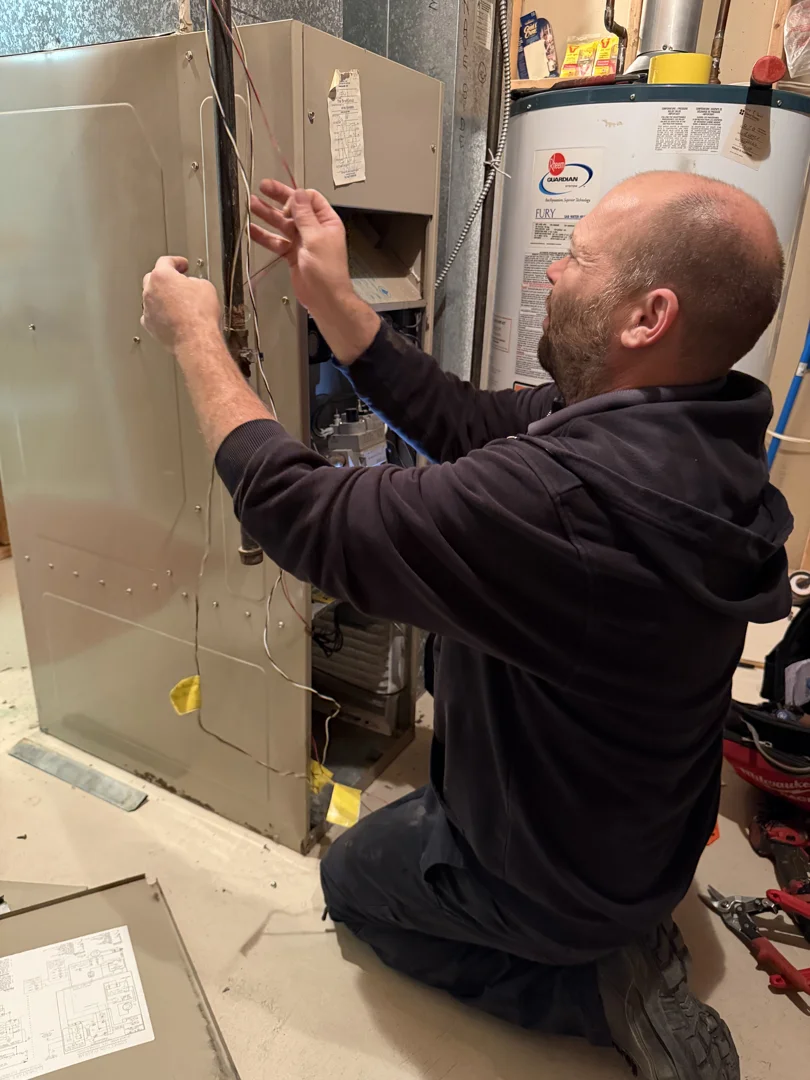
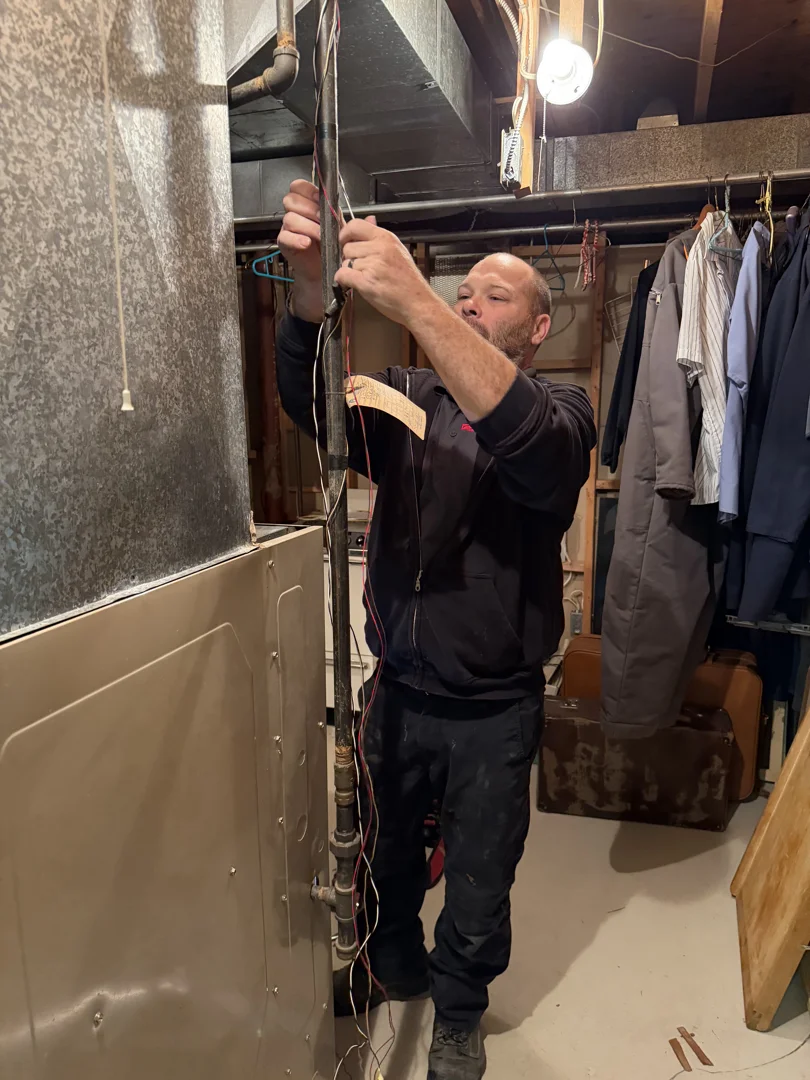
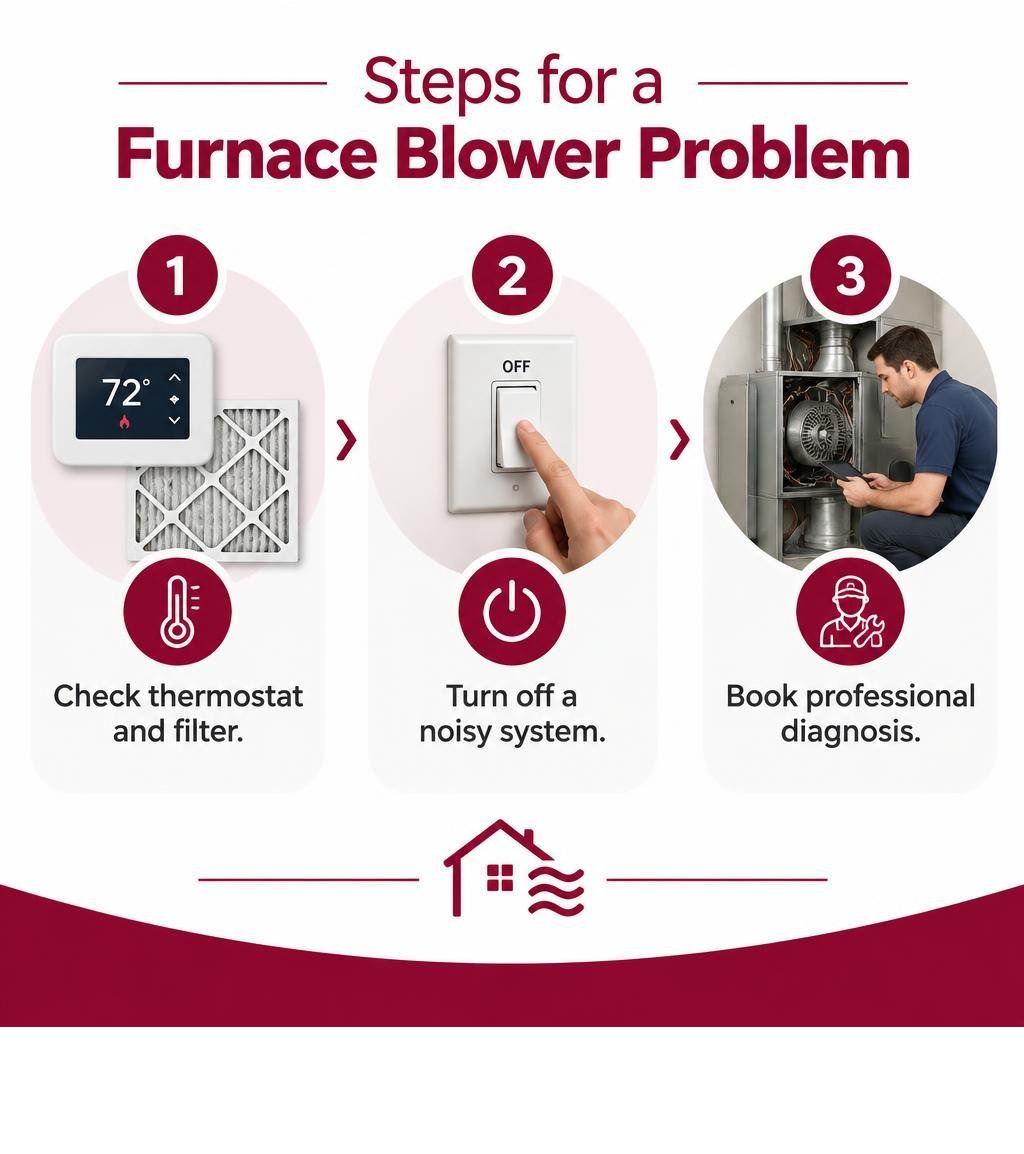
If you suspect a blower motor replacement is needed, or airflow is weak or absent, or you hear grinding or squealing, turn the system off and book a professional furnace repair. A failed capacitor or control board can look like a bad motor, so the cause needs to be confirmed before any part is replaced.
Woodbridge GTA ClimateCare provides furnace repair across the Greater Toronto Area, including Woodbridge and Vaughan.
Understanding Furnace Airflow and Blower Motor Operation
A high-efficiency forced-air furnace relies entirely on its blower assembly to deliver conditioned air throughout your home. While the burner assembly generates thermal energy within the heat exchanger, the blower assembly acts as the circulatory engine of the entire system.
The blower motor powers a curved squirrel-cage fan wheel housed inside a heavy metal scroll. When the furnace reaches operating temperature, the motor spins the wheel at precise speeds to draw cool return air through your ductwork, push it across the heat exchanger, and distribute comfortable, heated air into every room.
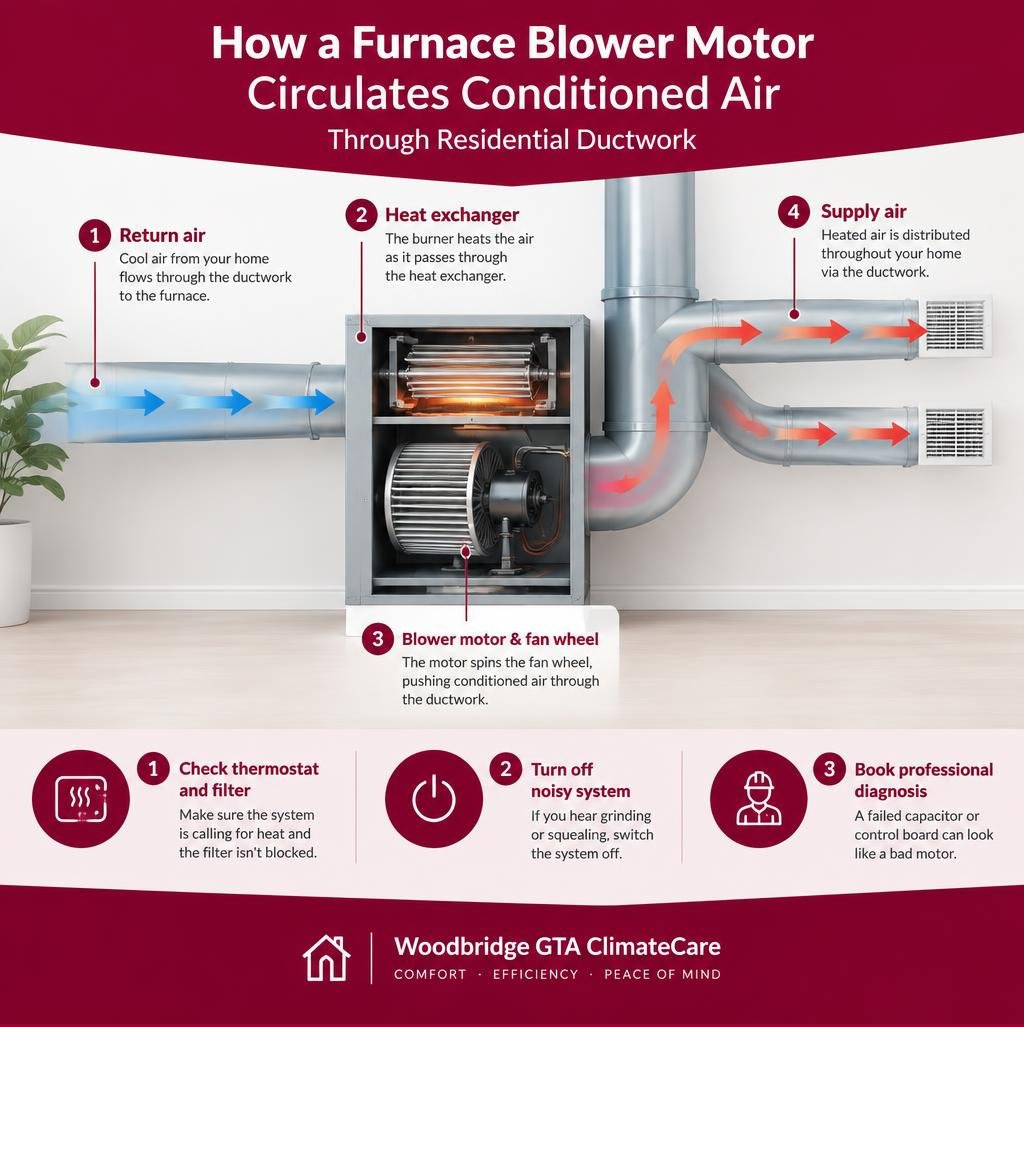
When this motor encounters electrical or mechanical strain, overall air circulation drops rapidly. Left unchecked, poor airflow causes the heat exchanger to overheat, tripping internal safety limits and shutting down your heating system entirely.
Warning Signs That Require a Blower Motor Replacement
Recognizing early warning signs allows homeowners across Woodbridge, Vaughan, and the Greater Toronto Area to address equipment problems before complete winter breakdowns happen. Common symptoms that indicate the assembly is struggling include:
- Weakened or Absent Airflow : Registers barely push warm air into living spaces even though the furnace burner is actively firing.
- Grinding, Scraping, or Squealing Sounds : Metal-on-metal squealing indicates internal motor bearings are drying out or seizing.
- Continuous Humming or Buzzing : The motor attempts to draw electrical power to turn over but cannot spin due to seized bearings or internal winding failure.
- Electrical Burning Odors : Overheated motor windings or failing control relays produce a distinct, pungent burning smell through supply vents.
- Repeated Short-Cycling : Insufficient airflow causes internal furnace temperatures to rise above normal operating limits, causing high-limit safety switches to cycle the burners off repeatedly.
Diagnosing Airflow Issues Before Replacing the Motor
Before condemning the motor itself, a certified technician evaluates the broader airflow dynamics of your heating system. What appears to be an internal motor failure may instead stem from external airflow restrictions.
Excessive static pressure from undersized or clogged return ducts forces the motor to work harder, dramatically increasing operating temperatures. Blower wheel imbalance caused by accumulated dust and debris on the fan blades also strains the motor shaft. During a diagnostic visit, our technicians check board error flash codes, measure duct static pressure, and ensure your system gets the exact furnace repair required.
Electrical and Component Failures in High-Efficiency Heating Systems
Modern high-efficiency furnaces utilize sophisticated control circuits and electronic controls that can mimic motor failure when they malfunction. Common electrical root causes include:
- Failed Run Capacitors : On standard motors, a degraded capacitor cannot deliver the electrical phase shift needed to start and run the motor, leaving the fan humming without spinning.
- Faulty Control Board Relays : Heavy electrical loads passing through circuit boards can cause relay solder joints to crack or burn out over time, preventing line voltage from reaching the blower leads.
- Damaged ECM Electronic Modules : Variable-speed motors rely on an attached electronic control module that can fail independently due to transient voltage spikes or moisture exposure while the mechanical motor windings remain completely intact.
- Tripped Thermal Overload Switches : Internal safety protectors open when the motor exceeds safe operating temperatures, shutting the fan off to prevent electrical fires.
Why Professional Diagnosis Matters
Furnace blower motor service involves line voltage wiring, high-capacity capacitors, and integrated electronic controls. Attempting to service these components without proper diagnostic tools and safety procedures exposes homeowners to serious electrical shock and risks damaging sensitive furnace circuit boards.
Certified technicians utilize dedicated testing meters to isolate whether a fault lies in the run capacitor, the circuit board, the electronic module, or the motor windings. Relying on professional service preserves equipment warranties, ensures correct electrical polarity, and maintains safe operating clearances. Our guide explains the HVAC repairs you should not do on your own and the vital safety measures required for complex furnace components.
Professional Motor Replacement and Long-Term Furnace Reliability
When a replacement is necessary, our certified technicians source the exact OEM or manufacturer-approved motor designed for your specific furnace model and airflow specifications.
The replacement process involves isolating electrical power, safely discharging internal capacitors, extracting the complete blower housing, aligning the new motor shaft to the squirrel-cage wheel, and verifying motor speed taps against the furnace control board. After installation, technicians perform commissioning tests—measuring motor amp draw, verifying static pressure, and testing temperature rise across a complete heating cycle—to ensure balanced performance. For reliable service, trust our team at Woodbridge GTA ClimateCare to restore your home comfort.
Comparing PSC, Constant-Torque, and Variable-Speed ECM Motors
Residential furnaces use three primary types of blower motor technologies, each offering distinct operational profiles and electrical characteristics:
Protecting Heating Equipment with Certified Maintenance
The most effective way to prevent premature motor wear and maintain peak heating efficiency is through regular professional care. Over time, household dust coats blower blades, adding rotational weight that strains bearings and increases motor operating temperatures.
Routine furnace maintenance includes comprehensive blower wheel cleaning, electrical amp-draw testing, capacitor health checks, and static pressure measurements. To keep your equipment operating safely through freezing Canadian winters, explore our wecare maintenance and protection plans for year-round peace of mind, priority emergency support, and expert preventative servicing across the Greater Toronto Area.